What To Bring On A Florida Fishing Charter: A Packing List By Trip Type
The gear you actually need depends on which of Orlando's three charter types you booked: a bass lake trip, an inshore lagoon trip, or an offshore run from Port Canaveral. Here is what to pack for each, and what to leave in the car.
Short answer
For any Florida charter, pack polarized sunglasses, high-SPF sun protection, a wide-brim hat, non-slip shoes, a small cooler with water, and your fishing licence if the trip is freshwater. Bass charters need the least gear, inshore trips add wading and bug items, and offshore trips add seasickness remedies and layering for wind and spray.
Florida charter captains supply the boat, the rods, the tackle and the expertise, which means most first-time guests overpack the wrong things and underpack the right ones. The single most common mistake on Central Florida trips is not a forgotten lure, it is a forgotten fishing licence: every freshwater bass charter in this region requires each angler to hold their own Florida freshwater licence, and none of the bass charters listed here bundle one into the price. The saltwater side is different, a paying passenger on a licensed for-hire vessel is exempt under Florida rules, though it is still smart to ask your captain to confirm before the boat leaves the dock.
What you carry also depends heavily on which of the three charter types you booked. A 3-hour private bass trip on Lake Tohopekaliga, the kind run out of Big Toho Marina such as the Half-Day Private Bass Charter, is a completely different packing problem from a 5-to-9-hour private deep-sea run out of Port Canaveral, or a 4-hour inshore charter in the lagoon near New Smyrna Beach. This guide breaks the list down by trip type so nothing gets carried that a crew will simply stow unused.
What Should Every Angler Pack On A Florida Charter?
Every Florida charter guest should pack polarized sunglasses, reef-safe high-SPF sunscreen, a wide-brim or buff-style hat, moisture-wicking clothing, non-marking closed-toe shoes, a refillable water bottle, cash or a card for guide tipping, and their own fishing licence when the trip is freshwater. Tackle, rods, bait and safety gear are supplied by the operator, so duplicates of those items are dead weight.
Polarized sunglasses deserve their spot at the top of the list. Florida's bass lakes and lagoon flats are shallow-water fisheries where sight matters: cutting surface glare lets you see bedding bass on Lake Toho, tailing redfish on a Mosquito Lagoon flat, and bait schools along a Port Canaveral weedline. Polarization, not lens tint, is the feature that does the work, so any decent pair qualifies.
Sun protection in Central Florida is not optional in any season. UV index readings in the Orlando area regularly sit in the very high range for much of the year, and a charter puts you on reflective water for hours with no shade. A broad-spectrum sunscreen of SPF 30 or higher, reapplied at least once mid-trip, plus a hat with a brim wide enough to cover your ears, does more for your comfort than any piece of fishing gear. Lightweight long-sleeve fishing shirts outperform sunscreen alone because they never sweat off.
Footwear is the item guests most often get wrong. Bass boats and offshore cockpits have surfaces that scratch and stain, so captains ask for non-marking soles. On a pontoon-family charter like the 4-Hour Family Pontoon Charter on Lake Toho, deck shoes or sneakers are fine. Flip-flops fail on every boat type: they offer no grip on a wet deck and no protection from a dropped hook or lead weight.
| Item | Why It Matters | Notes |
|---|---|---|
| Polarized sunglasses | Cuts glare for sight fishing | Any polarized lens works, price is secondary |
| SPF 30+ sunscreen | Florida UV runs very high much of the year | Reapply mid-trip, spray bottles annoy crews, use lotion |
| Wide-brim hat | Ears and neck burn fastest on water | Buff or neck gaiter is a good add |
| Non-marking closed-toe shoes | Protects feet and the boat's deck | No black-soled boots, no flip-flops |
| Water bottle or hydration pack | Heat dehydration ends trips early | Most captains supply water, bring your own anyway |
| Cash or card for a tip | Standard guide gratuity runs 15-20% | More detail in our guide to tipping |
| Florida fishing licence | Required per angler on freshwater trips | Saltwater for-hire passengers are exempt, confirm with the captain |
Our fuller breakdown of tipping a Florida fishing guide covers gratuity norms, and the licence question gets its own section below, because it is the one item that can legally end a trip before it starts.
What Should You Pack For A Freshwater Bass Charter Near Orlando?
Pack light for a bass charter: your licence, sun gear, a light rain layer, snacks, a phone or camera, and a small soft cooler if the operator allows it. Rods, tackle and bait are provided on every bass listing in this roster, so the only gear decision you genuinely face is the licence, which no freshwater charter here includes in the price.
The freshwater licence rule is the critical one and it is the opposite of the saltwater rule. Florida's official exemption list for freshwater, published by the Fish and Wildlife Conservation Commission on its do-I-need-a-licence page, contains no for-hire-vessel exemption, so a guide's own licence does not extend to paying clients. Every Lake Toho, Butler Chain, Johns Lake and Lake Apopka charter in this roster requires each angler to buy their own. The one listing that says so most bluntly is the pontoon charter whose title flags the licence exclusion outright, and it is worth treating that flag as the default assumption for all ten freshwater trips.
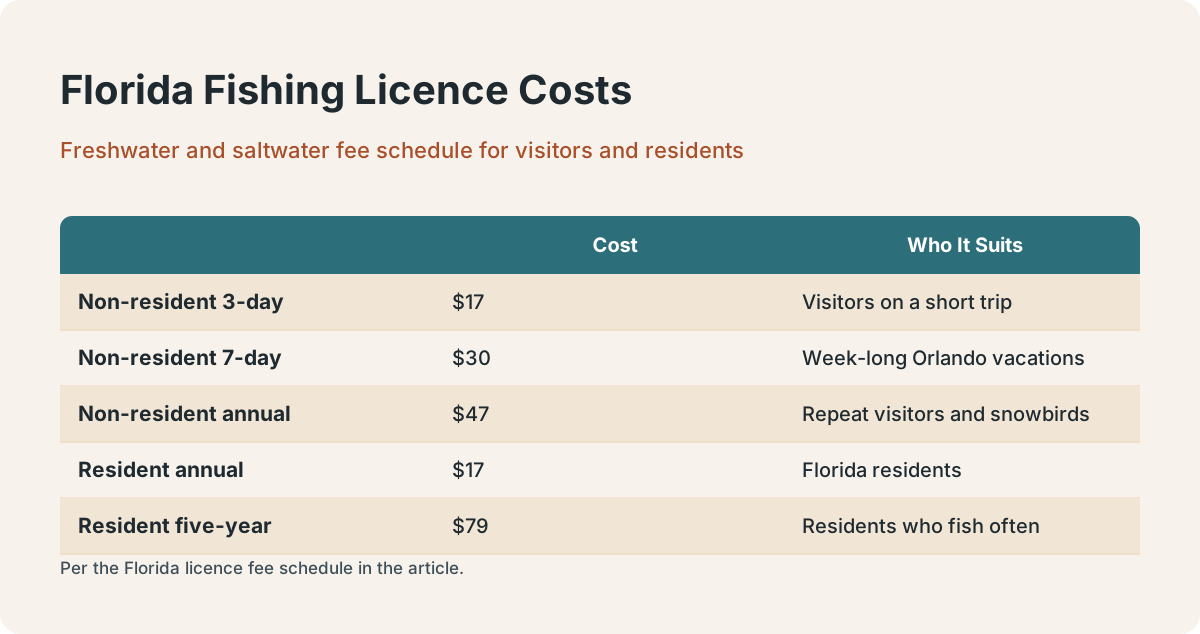
For a visiting angler, the cheapest valid option is the non-resident 3-day freshwater licence at $17, which comfortably covers a two-day fishing weekend. The full fee schedule is identical for freshwater and saltwater, and it is laid out below.
| Licence | Cost | Who It Suits |
|---|---|---|
| Non-resident 3-day | $17 | Visitors on a short trip, the usual choice |
| Non-resident 7-day | $30 | Week-long Orlando vacations |
| Non-resident annual | $47 | Repeat visitors and snowbirds |
| Resident annual | $17 | Florida residents |
| Resident five-year | $79 | Residents who fish often |
There is one way around the fee: Florida waives the licence requirement for everyone on set licence-free days, and the next freshwater dates are April 3-4 and June 12-13, 2027, per the state's free fishing days schedule. All other rules, including seasons and size limits, still apply on those days, and bass bag limits specifically are worth checking on MyFWC.com before you go rather than assuming a number.
Beyond paperwork, a bass morning is the gentlest packing job of the three charter types. Lake Toho charters run 25 to 30 minutes from the Disney area, so you can leave a resort after breakfast with a small bag and be casting within the hour. The Half-Day Private Bass Charter out of Big Toho Marina, rated 4.9 across 48 reviews and priced from $200 per person, is the region's most-booked proof of that: up to 4 anglers, largemouth bass and pickerel, and nothing on the packing list beyond the universal items above. Families with young kids often prefer a pontoon layout instead, and the 4-Hour Family Pontoon Charter on Lake Toho, from $333 per person, trades some maneuverability for space and stability.
One planning note that affects what you wear rather than what you carry: the strongest trophy-bass window on the Kissimmee Chain runs December through April, when fish move shallow to spawn, so a winter charter calls for a warm layer you can shed by mid-morning. Our best time of year to fish near Orlando guide maps the full calendar.
What Should You Bring On An Inshore Saltwater Charter?
Pack the universal list plus bug spray, a buff for wind, and clothes you do not mind getting salty, and skip the licence question entirely: a paying passenger on a licensed for-hire vessel is exempt from Florida's saltwater licence requirement. Confirm with your captain that the boat holds a valid charter licence, then bring only sun protection, hydration and any seasickness remedy as a precaution.
The licence exemption is spelled out on the same FWC page: individuals saltwater fishing from a for-hire vessel holding a valid charter licence are exempt from needing their own licence. That covers the lagoon charters in this roster, including the New Smyrna Lagoon Redfish Charter and the inshore trips running out of Cape Canaveral and Port Canaveral. The Inshore Charter out of Cape Canaveral, whose own listing states the licence is included, from $387.50 per person, is the roster's clearest example of the exemption in practice.
What inshore trips add to the packing list is mostly about exposure rather than gear. Lagoon fishing means long stretches of slow drifting or poling across open water with no shade, and the same Florida sun that cooks a bass lake hits harder when reflected off a shallow flat. Light-colored, loose, long-sleeve clothing beats shorts and a t-shirt here, and a buff protects the neck and lower face in a way no sunscreen survives.
Bug spray matters more than visitors expect, especially on summer mornings near New Smyrna Beach. The lagoon's mangrove shorelines and shallow grass flats are productive habitat for no-see-ums and mosquitoes at dawn and dusk, precisely the low-light windows when redfish and snook are most active. A repellent with DEET or picaridin, applied before boarding, is the difference between a great bite window and a miserable one.
| Inshore Add-On Item | Purpose | When It Matters Most |
|---|---|---|
| Insect repellent (DEET or picaridin) | No-see-ums and mosquitoes at dawn and dusk | Summer mornings near mangroves |
| Buff or neck gaiter | Sun and wind protection for the neck and face | All day on open flats |
| Light long-sleeve shirt | Sun coverage that never sweats off | Drifting open water |
| Motion-sickness remedy | Insurance for choppy lagoon days | Windy days, first-time boaters |
| Dry bag or zip bag for phone | Spray and rain protection | Any season |
Regulation awareness is worth a pocket of your attention too. Redfish in the Indian River Lagoon management region were catch-and-release only through 2026, a rule distinct from the statewide slot, and snook seasons in the region run February 1 through May 31 and September 1 through December 14, per FWC's coastal species regulations. You do not need to pack anything for this, the captain handles it, but knowing the rules shapes whether you pack a cooler for fillets or just a camera. Our inshore fishing from Orlando guide covers the lagoon fisheries in depth.
A bass charter remains the simplest trip to pack for, and the half-day Lake Toho listing is the one most Orlando visitors choose first.
What Do You Need For A Deep-Sea Charter From Port Canaveral?
Pack the universal list plus a genuine wind layer, motion-sickness tablets taken before boarding, a dry bag, and more food and water than you think you need, because offshore trips run 5 to 9 hours with no return to shore. The saltwater licence exemption still applies on licensed for-hire vessels, so paperwork stays light while clothing and provisions get serious.
Offshore is where packing errors actually cost you. A private deep-sea charter from Port Canaveral, such as the most-reviewed offshore listing in this region, rated 5.0 across 49 reviews and priced from $725 per person, can run up to 9 hours. That is a full workday on open Atlantic water, and everything you did not bring, you do without. The wider set of guides lives on Fishing Tours Orlando.
Motion sickness is the headline item. Take an oral remedy an hour before departure, not after the first swell, because these drugs work preventively rather than rescue-actively. Ginger candies and acupressure bands help milder cases. Statistically, most guests are fine, but the ones who are not fine are done for the day, and there is no marina to retreat to 20 miles out.
Layering is the second headline. Even in Florida, offshore wind and spray drop the effective temperature sharply, especially on a fast run out through the inlet at 7 a.m. A light windbreaker or spray top over your sun shirt covers the morning run, then stuffs into a bag by midday. Long pants are reasonable on winter and early-spring trips, when Space Coast sailfish and wahoo fishing is at its best.
| Offshore Item | Why | Freshwater Charter Equivalent |
|---|---|---|
| Motion-sickness remedy, taken pre-boarding | No retreat option on a 5-9 hour run | Rarely needed on a calm lake |
| Windbreaker or spray top | Wind chill and spray on the inlet run | Light rain layer only |
| Hearty food, more than you expect | Full-day trips outlast snacks | Small snacks suffice |
| Dry bag for electronics | Constant spray and wash-downs | Zip bag is enough |
| Hand towel | Drying hands between bait rigs | Optional |
Provisions deserve emphasis. A short 2-hour bass slot, like the low-cost short-slot Lake Toho charter at from $165 per person, needs nothing but a water bottle. A 9-hour offshore day needs real food: sandwiches, fruit, salty snacks, and two liters of water per person at minimum. Most Port Canaveral crews allow and encourage a personal cooler, and the budget-entry 5-7 hour deep-sea listing from Cape Canaveral, priced on the live listing, is the entry point where the full-day provisioning habit starts to matter.
Drive time shapes the morning packing routine too. Port Canaveral sits roughly 45 to 60 minutes from the Orlando area via SR-528, so an offshore departure means an early alarm, a packed cooler loaded the night before, and a plan for coffee on the road. Our deep-sea fishing from Port Canaveral guide covers the full logistics of getting to the dock.
How Do Florida Sun And Weather Change Your Packing List?
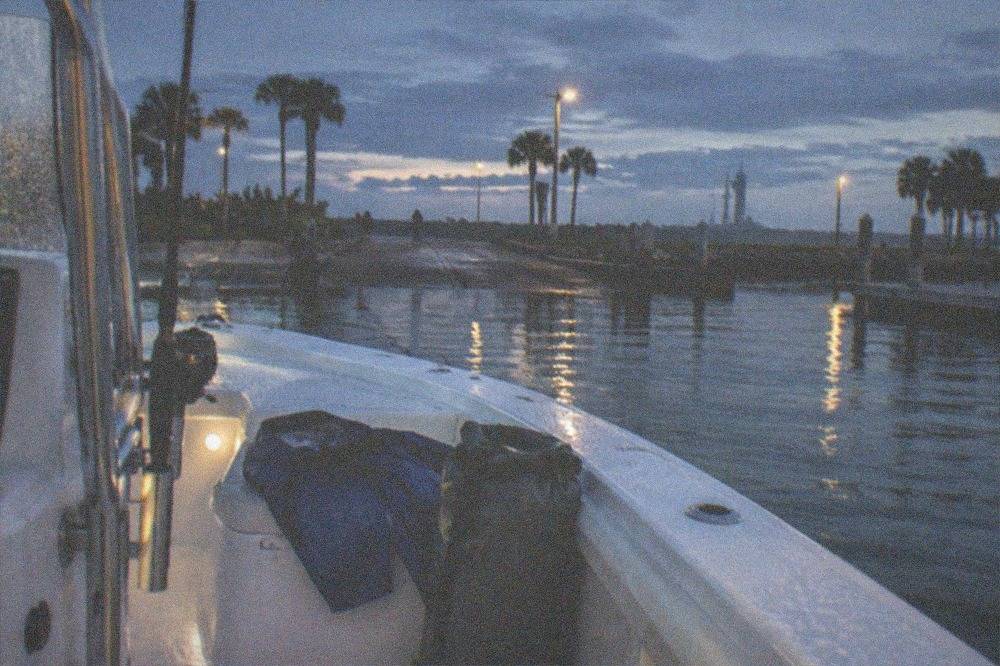
Plan for intense sun in every season, sudden afternoon thunderstorms from June through September, and a real temperature swing between the dock at dawn and midday on the water. Pack a reef-safe SPF 30+ lotion, a hat, a buff, and a packable rain shell on every single trip, and add a warm layer for winter dawn runs on the lakes or offshore.
The Florida sun does not take winter off. UV exposure on open water is amplified by reflection, and the difference between a 3-hour morning charter and a full-day trip is not whether you burn, it is how badly. Lotion sunscreen is preferred by most crews because overspray stains boat upholstery and gelcoat; apply it before boarding and reapply once mid-trip. Lip balm with SPF is the item veterans always have and newcomers never do.
Summer afternoons bring the thunderstorm factor. Central Florida's rainy season, roughly June through September, produces fast-building storms that charter captains track on radar and dodge by running early or sheltering. That is the captain's job, but your rain shell lives in your bag for exactly these moments, and a dry bag for your phone is cheap insurance on any trip. The flexible-length listings in this roster, like the budget bass charter near Disney that runs 2 to 6 hours from $175 per person, are partly popular because a flexible end time lets a family beat a building storm without feeling shortchanged.
Temperature swings are the quiet packing variable. A January dawn on Lake Toho can sit in the 40s Fahrenheit while the same afternoon touches 70, and a March offshore run is jacket-cold until the boat stops. Dress in light layers you can shed into a bag rather than one heavy coat, and you will be comfortable across the whole trip. The FWC's water-temperature guidance is a useful reference for how water temperature drives both bass behavior and what you will want to wear at first light.
What Should You Leave Behind On A Fishing Charter?
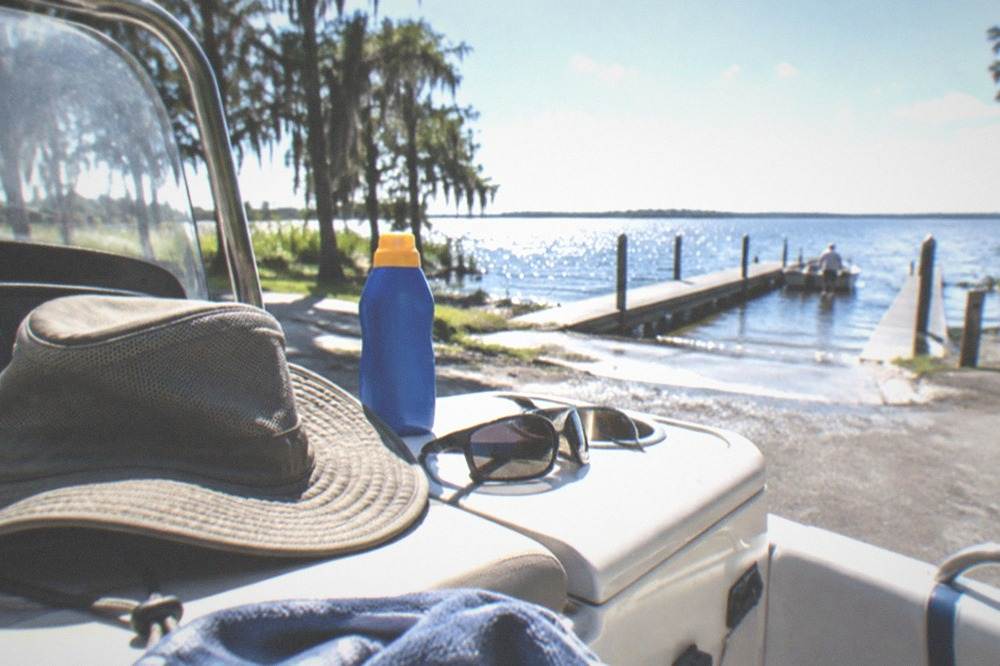
Leave behind hard coolers when the operator supplies ice, glass bottles, drones without prior permission, heavy tackle boxes, bananas if your crew is superstitious, and more than one small bag per person. Boats are space-limited, clutter slows the crew, and everything you bring has to be stowed safely for the whole trip.
The banana superstition is real among Florida charter crews, and arguing with it costs you nothing: eat your banana in the parking lot. Glass is a genuine prohibition on nearly every vessel, since broken glass on a rocking deck is a hazard no captain tolerates. Hard-sided coolers are usually redundant because bass and offshore crews alike carry ice and a fish box, so a soft bag with your drinks is the better call, though a fish-haul cooler for the ride home is smart on trips where you expect fillets.
Rod and tackle duplication is the most common wasted space. Guests arrive with bass rods on charters where the captain's gear is already rigged, tuned to local water and included in the price. If you have a favorite rod, ask the operator in advance whether bringing it is welcome; on the private listings, like the Butler Chain private charter rated 5.0 across 64 reviews, the answer is often yes, but the ask comes first.
Drones are a permission item, not a prohibition item: many operators love the footage, but FAA rules and the captain's insurance terms make it a conversation rather than an assumption. Firearm carry on charter vessels is another ask-first item. And on the freshwater side, remember that live bait regulations can be species- and water-specific, so do not transport bait between lakes without checking, which is one more reason to let the guide handle the bait entirely.
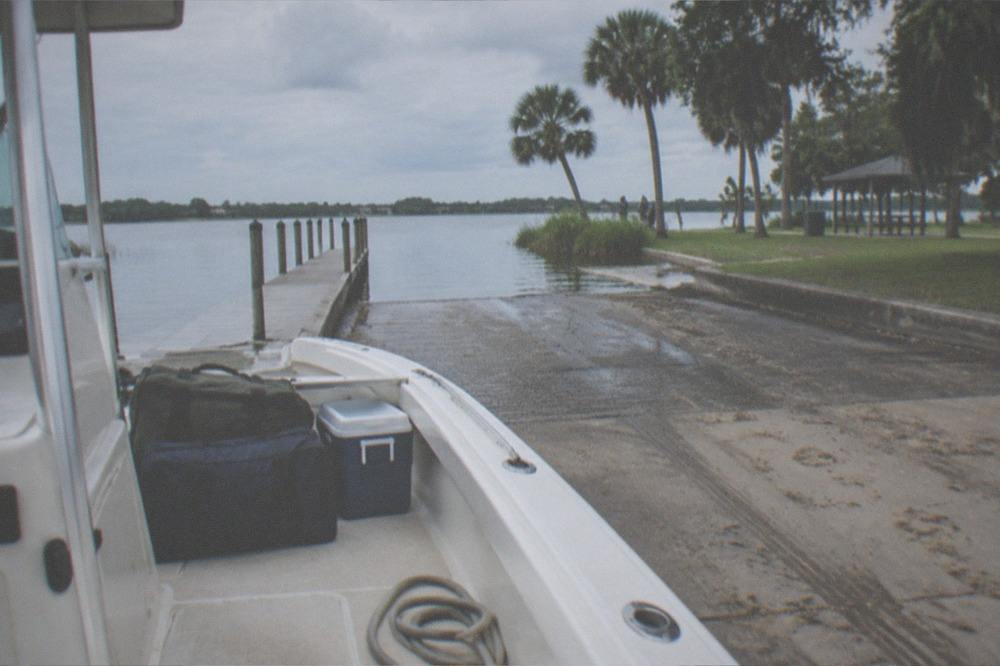
If you are still choosing between trip types before you pack, the inshore option is the middle ground: light gear like a bass trip, but with the licence question already handled by the for-hire exemption.
Which Trip Type Is Easiest To Pack For?
Freshwater bass charters are the easiest to pack for: a licence, sun gear and a small bag cover a 3-to-6-hour lake trip completely. Inshore trips add only bug spray and a buff, while offshore charters demand real provisioning, layering and motion-sickness planning, because a 5-to-9-hour run leaves no room to retrieve a forgotten item.
For most Orlando visitors, that ranking settles the decision. A family staying near Disney can book a short bass slot, such as the flexible budget charter near Disney rated 4.8 across 24 reviews, pack a single backpack, buy a $17 three-day licence online the night before, and be fully prepared. The same family considering an offshore day needs a cooler, a pharmacy run and an early alarm, and that difference is worth knowing before you book rather than after.
Fishing Tours Orlando exists to make exactly these comparisons easy: honest, verified listings across all three charter types, with the packing, licence and cost realities stated plainly.
The licence distinction remains the one thing to double-check against your booking confirmation. Freshwater means every angler buys a licence; saltwater means the for-hire exemption covers you on a licensed vessel, with a quick captain confirmation as good practice. Our dedicated guide on whether you need a fishing licence for an Orlando charter walks the full rule, and the non-resident cost breakdown lives in our Florida licence cost guide.
Common Questions About Packing For A Florida Fishing Charter
Do I need to bring my own fishing rod and tackle?
No. Every charter on this roster supplies rods, reels, bait and tackle as part of the trip. If you have a favorite rod, ask the operator in advance whether bringing it is welcome, but never bring a full tackle box, it is dead weight the crew has to stow.
Do I need a fishing licence for a charter in Florida?
On freshwater bass charters, yes: every angler needs their own Florida freshwater licence, and no bass listing in this roster includes one in the price. On saltwater charters, a paying passenger on a licensed for-hire vessel is exempt from needing their own licence, though it is good practice to ask your captain to confirm.
Can I bring a cooler and drinks on the boat?
Usually yes, and on full-day offshore trips you should. Most crews supply ice and water, but a soft cooler with your own drinks and food is welcome on nearly every listing. Skip glass bottles and hard-sided coolers unless the operator asks you to bring one for fillets.
What shoes should I wear on a fishing charter?
Non-marking closed-toe shoes with grip, such as sneakers or boat shoes. Flip-flops fail on every boat type because they offer no traction on a wet deck and no protection from dropped hooks or weights. Black-soled boots are also commonly banned because they scuff gelcoat.
Should I take motion-sickness medicine before an offshore charter?
Yes, take it before boarding, about an hour before departure. Oral remedies work preventively rather than after symptoms start, and a 5-to-9-hour offshore run leaves no option to return to shore. Ginger candies and acupressure bands help milder cases.
Are there days when I can fish without buying a licence?
Yes. Florida waives the licence requirement for all recreational anglers on set licence-free days. The next freshwater dates are April 3-4 and June 12-13, 2027, and the next saltwater dates are June 5-6, September 4 and November 27, 2027. All other rules, seasons and size limits still apply on those days.