How Much Do You Tip A Fishing Guide In Florida? The Honest Answer
Tipping is the part of a fishing charter nobody prices into the budget until the boat is back at the dock. Here is what Florida guides actually expect, by trip length and charter type, based on current industry norms and the real Orlando-area roster.
Short answer
The customary tip for a Florida fishing charter is 15 to 20 percent of the trip cost, with 20 percent the common target for a good day. On a 4 hour trip that often means roughly $60 to $80 per group on a mid-priced inshore charter, and more on offshore boats. Cash is preferred.
The most awkward moment of most fishing trips happens at the dock, after the rods are racked and the fish are filleted. The captain holds the boat steady, everyone says thanks, and then the question surfaces: how much is enough? Tipping on a fishing charter is genuinely expected in Florida, it is a real line item in a guide's income, and almost nobody budgets for it until the moment arrives.
Fifteen to 20 percent of the total trip cost is the customary tip range on Florida fishing charters, with 20 percent cited as a common target for solid service. Some Florida contexts stretch that band from 10 to 30 percent, factoring in trip length, group size, and the workload of a mate or deckhand. In dollar terms the spread is wide: bass charters near Disney on the Fishing Tours Orlando roster start around $175, while private deep-sea trips out of Port Canaveral run up to $725, so the same percentage means very different cash in your guide's hand.
How Much Should You Tip A Fishing Charter Captain?
The standard tip for a Florida fishing charter runs 15 to 20 percent of the trip price, and 20 percent is the figure most guides and industry writers treat as the normal target for a good day on the water. On a $400 half-day trip, that lands between $60 and $80. Going below 15 percent sends a message, and going above 20 percent is a genuine thank-you for exceptional effort.
That range is not this site's invention. Florida charter guides and booking-industry writers converge on it from several directions: one Florida guide service's tipping guide calls 15 to 20 percent customary with cash preferred, and the industry's own booking-platform advice repeats the same band, noting that longer trips, deckhands and exceptional service push toward the top of the range or beyond it. Some Florida sources frame the acceptable floor lower, around 10 percent, but treating 10 percent as the default is a good way to be remembered for the wrong reason at a marina where captains talk.
A useful way to think about it: the tip is not a bonus, it is the service-industry wage layer of a guide's income, the same way it is for a restaurant server. Charter crews commonly work well beyond the hours you see, loading bait before you arrive, running the boat, rigging tackle, untangling your backlash for the fourth time, and filleting your catch after the meter stops. The price you paid for the trip covers the boat, fuel, insurance and the operator's business costs. The tip is what says the effort was worth it.
The one thing not to do is skip the tip because the fishing was slow. More on that below, because there is a real distinction between a slow bite and a poor effort, but the short version is this: you tip for the work, not for the fish count, unless the work was genuinely bad.
How The Standard Charter Tip Math Works
Take the price you actually paid for the charter, before taxes and fees, and multiply by 0.15 to 0.20. On longer trips with a mate or deckhand, plan a separate cash tip for the mate, commonly a share of the same 15 to 20 percent pool. Round up or down to a clean bill amount, because nobody wants to make change on a rocking boat.
The math is simple, but the trip length changes the psychology. On a short 2 or 3 hour trip, a percentage tip can feel small in absolute terms, and many anglers round up generously. On a full-day offshore trip, 20 percent of a four-figure charter price is serious money, and that is exactly why it is worth deciding on your number before the trip rather than doing anxious mental arithmetic on the ride home.
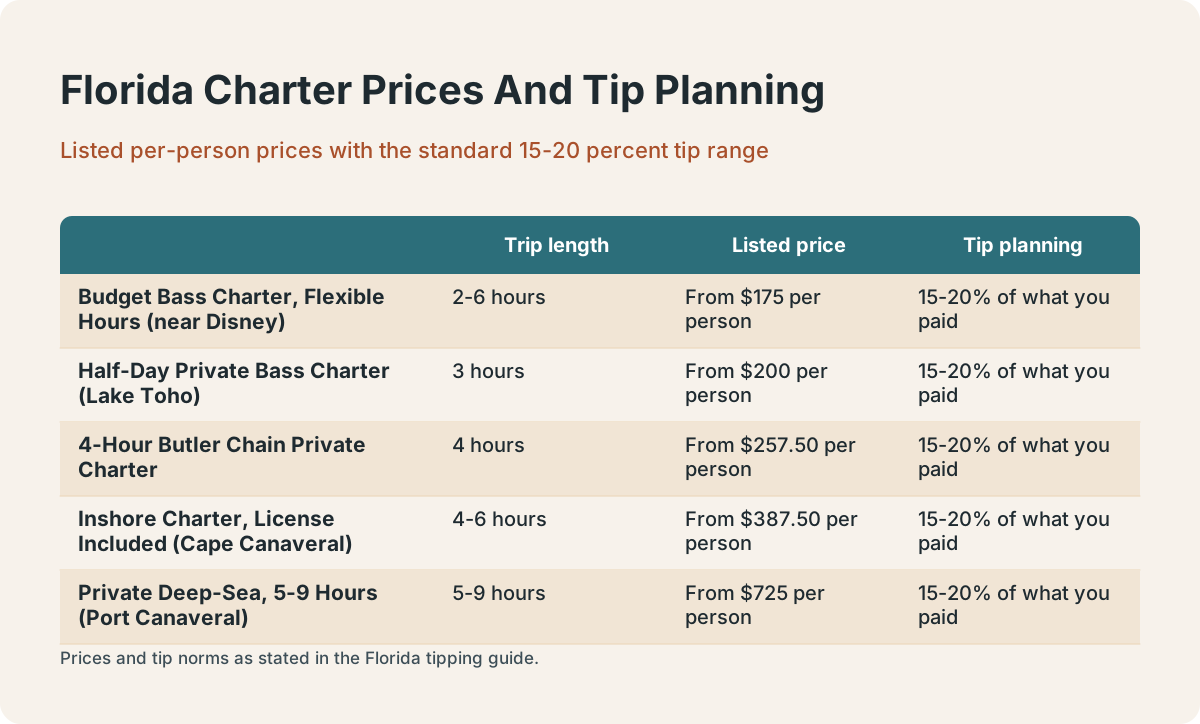
Here is how the percentage applies to real trips from this site's own roster, using the actual listed starting prices:
| Charter | Trip length | Listed price | Tip planning |
|---|---|---|---|
| Budget Bass Charter, Flexible Hours (near Disney) | 2-6 hours | From $175 per person | 15-20% of what you paid |
| Half-Day Private Bass Charter (Lake Toho) | 3 hours | From $200 per person | 15-20% of what you paid |
| 4-Hour Butler Chain Private Charter | 4 hours | From $257.50 per person | 15-20% of what you paid |
| Inshore Charter, License Included (Cape Canaveral) | 4-6 hours | From $387.50 per person | 15-20% of what you paid |
| Private Deep-Sea, 5-9 Hours (Port Canaveral) | 5-9 hours | From $725 per person | 15-20% of what you paid |
Two honest caveats on that table. First, several of these charters are private trips priced per person, so the total bill scales with your group size and the tip should scale with the bill, not with the per-person figure. Second, these are starting prices; longer slots and bigger groups cost more, and the percentage travels with what you actually paid.
A percentage is the default, but it is not the only honest way to tip. Some anglers on short freshwater trips prefer a flat $50 per angler for a half-day, which on a two-person Lake Toho charter often lands above 20 percent and is never resented. On big offshore boats with a mate who did the gaffing, the bait cutting and the fish cleaning, plan cash for both crew members, and ask the captain up front how the crew splits tips if you are unsure. Charter crews commonly answer that question plainly; it is not an awkward one.
How Much Should You Tip On A 4-Hour Fishing Trip?
For a 4 hour fishing trip, tip 15 to 20 percent of the charter price, which on typical Orlando-area freshwater trips means roughly $40 to $55 per group, and on 4 hour inshore saltwater charters closer to $60 to $80. If the trip ran long, the crew cleaned fish, or a kid on board got extra coaching, push toward or past the top of the range.
Four hours is the most common charter length in this region, which is why the question comes up so often. It is long enough for a guide to put in a real working day, short enough that the price stays in the range most families will pay. The 4-Hour Butler Chain Private Charter in Windermere, one of the most-reviewed freshwater listings on this site at 5.0 across 64 reviews, starts at $257.50 per person, so a two-angler booking should be tipped on the full bill for the pair, not on one seat. The 4-Hour Family Pontoon Charter on Lake Toho starts at $333 per person, and the same percentage rule applies to whatever the group actually paid.
The saltwater side of the 4 hour question runs higher, because the trips themselves cost more. The 4-Hour Port Canaveral Inshore charter starts at $375 per person, and the New Smyrna Lagoon Redfish Charter, which fishes the lagoon system for redfish under the saltwater for-hire licence exemption, starts at $333. On either one, 20 percent of the actual bill is the number most crews will quietly consider normal, and the licence coverage is worth noting here too: on saltwater charters a paying passenger is covered by the operator's charter licence, so a tip is not competing with a licence purchase in your budget. Ask your captain to confirm the coverage before the trip.
One pattern worth knowing from the industry's own advice: longer trips justify the top of the range partly because the crew's day is longer than yours. A 4 hour charter is really a 7 or 8 hour day for the guide once you count staging, launching, cleaning and fueling. That is the honest argument for 20 percent as the default rather than 15 on anything but a mediocre trip.
Private Vs Shared Charters: Does The Tip Change?
The percentage does not change between private and shared charters, but the payer does: on a private trip, your group tips on the whole boat price, while on a shared or walk-on trip each angler tips on their own seat. In practice, private-charter tips run larger in absolute terms simply because the bill is larger.
The distinction matters more than visitors expect. Orlando-area fishing is overwhelmingly a private-charter market; nearly every listing on this site's roster is a private boat booked by one group. That means the tip is entirely yours to give, and the crew's attention was entirely yours, which cuts both ways: a great day feels personal, and a flat day has no other customers to share the blame or the bill with.
On a shared head-boat style trip, the norm is per-seat: each angler tips their own 15 to 20 percent of their own ticket. The crew is working for a dozen strangers at once, so the personal-effort calculus is different, and nobody on a shared boat should feel obligated to cover their neighbor's share. For a deeper comparison of the two formats, see the site's guide to private versus shared charters near Orlando.
The Lake Toho freshwater listings illustrate the private-market reality. The 3-Hour Private Bass Boat charter on Lake Tohopekaliga starts at $200 per person and carries a 5.0 rating across a small pool of 4 reviews, and the Half-Day Private Bass Charter out of Big Toho Marina, the most-reviewed Lake Toho listing at 4.9 across 48 reviews, starts at the same $200 per person figure. On either trip, the captain is yours for the slot, and the tip reflects that one-to-one arrangement.
If you want to see how the underlying prices differ by format before you think about tips at all, the site's Orlando fishing charter price comparison breaks the roster down by category and trip length. The short version: freshwater bass trips start at $165 to $412.50 per person depending on boat and lake, inshore saltwater runs $333 to $387.50, and deep-sea starts at $675.
What The Tip Actually Pays For
A charter tip compensates the labor that surrounds the fishing: pre-trip bait and tackle prep, boat handling, instruction, fish landing, and the post-trip cleaning of both the catch and the boat. None of that labor appears on your receipt, and on Florida charters much of it happens before you arrive and after you leave.
It is worth being concrete, because the "why" behind tipping is what makes the number feel reasonable rather than extracted. A typical half-day on a Lake Toho bass charter involves the guide checking water and weather that morning, loading live bait, rerigging the rods your group tangled, repositioning the boat every time the wind shifts, and landing, measuring and photographing every fish. After you leave, the boat gets washed, the tackle gets restowed and the next day gets planned. Charter crews commonly put in two to three hours of unpaid margin around a four-hour paid slot.
Fish cleaning deserves its own line. On inshore and offshore saltwater trips especially, the crew's filleting of your catch is a service performed after the trip's paid hours, and it is one of the most commonly cited reasons Florida guides give for expecting the top of the tipping range. A guest review tradition has grown up around exactly this moment: many of the most positive reviews on charter listings mention the crew cleaning and bagging the catch as a highlight of the day. If you kept fish and the crew filleted them, that alone justifies 20 percent.
The saltwater licence exemption is worth repeating here as a budgeting point, because it changes what your discretionary money is available for. Per the official FWC licence rules, individuals saltwater fishing from a for-hire vessel with a valid charter licence are exempt from needing their own saltwater licence, which covers the inshore lagoon charters and the Port Canaveral offshore fleet on this roster. Freshwater is the opposite: every bass charter in the roster requires each angler to hold their own Florida freshwater licence, and the cheapest option for a visiting tourist is the $17 non-resident 3-day licence. The site's fishing licence guide for Orlando charters covers the full rule.
One budgeting note on the saltwater side: because the licence is covered on for-hire saltwater boats, the money a freshwater angler would spend on a $17 licence is, on a saltwater trip, genuinely freed up. Some anglers fold it into the tip. That is a small, honest way the two sides of the roster differ in total day cost, and the site's guide to non-resident Florida fishing licence costs has the full fee schedule.
When You Can Tip Less, Or Not At All
You can reasonably tip below 15 percent when the crew was late, unprepared, dismissive or unsafe, and you can skip the tip entirely when the operator did not deliver the trip you booked. But a slow bite, bad weather the captain handled well, or fish that refused to cooperate are not valid reasons to cut a hardworking crew's tip.
This is where honest tipping advice diverges from tipping folklore, which sometimes reads as "tip 20 percent always, no matter what." The tip is a payment for service, and service can genuinely fail. Legitimate reasons to go below the range include a captain who spent the trip on his phone, tackle that was not ready, a boat that was not as booked, or a trip cut short without cause or refund. In those cases, a reduced tip, delivered with a calm explanation, is a fair consumer response.
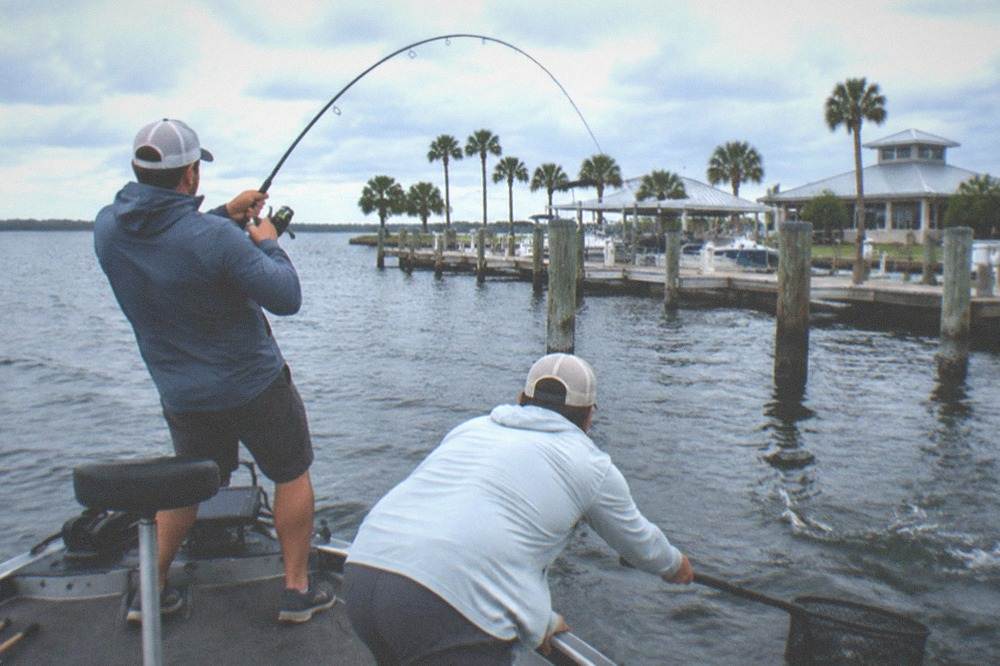
The distinction that matters is effort versus outcome. A captain who moved four times to find a bite, kept your kids engaged, and put you on schoolie bass when the trophy fish were shut down earned the full range even if the big one never came. Fish do not take reservations. Florida's own seasonal patterns make this concrete: the trophy bass window on Central Florida lakes runs roughly December through April, and summer trips lean on schooling fish and topwater at dawn, so a July morning that produces numbers rather than giants is the lake doing what the lake does in July, not the guide underperforming. The site's guide to the best time of year to fish near Orlando maps the whole calendar.
Weather is the same calculus. A captain who safely ran a shortened trip ahead of a front, or who rescheduled rather than took your money for a miserable day, is demonstrating exactly the judgment the tip rewards. Charter operators in this market commonly offer free cancellation windows on bookings, and a captain who uses one honestly to move your trip to a better day has earned goodwill, not a penalty.
| Situation | Fair tip response |
|---|---|
| Great effort, good catch, fish cleaned | 20 percent or a bit more |
| Great effort, slow bite, no fault of crew | Full 15 to 20 percent |
| Trip shortened by weather, partial refund given | Tip on what you actually paid |
| Crew late, unprepared or inattentive | 10 to 15 percent, with a calm word |
| Trip not delivered as booked, no remedy offered | No tip is defensible; take it up with the operator |
Cash, Apps, And How To Hand It Over
Bring cash in small bills, hand it directly to the captain at the end of the trip, and offer a separate cash tip to a mate or deckhand if there was one. Card tips and payment apps work on many boats but are not universal, so cash remains the safe default on Florida charters.
Cash is preferred across the Florida charter industry, and the reasons are practical rather than sentimental: boats process cards badly, connectivity at sea is unreliable, and crews settle their own accounts with the operator in ways a card terminal cannot always split. The standard practice is to hand the tip to the captain with a thank-you and a specific compliment, and to let him distribute it if there is a mate, unless the mate did work you want to recognize personally.
Timing is simple: end of trip, at the dock or ramp, after the fish are cleaned or the gear is stowed. Do not tip at the start; it reads as either a bribe for special treatment or a stranger's anxiety, and neither lands well. A verbal thank-you with specifics, "that double-up on the schooling bass was the highlight of our week," costs nothing and is the part of the tip crews actually remember.
A rough planning note for the budget line: if you are booking a mid-priced freshwater charter, mentally add 15 to 20 percent to the listed price as the true all-in cost, plus your freshwater licence if the trip is a bass charter. On the roster's deep-sea side, the same percentage applies to the $675 to $725 starting prices, so plan the gratuity as a real line item rather than a dock-side surprise. For the full cost picture beyond tips, including fuel surcharge chatter that circulated among Brevard County captains in 2026, the site's price guide covers it.
Tipping By Charter Type In Orlando: A Fast Breakdown
Freshwater bass charters near Orlando carry the smallest tips in absolute terms because they carry the smallest bills; inshore saltwater charters run higher; and deep-sea trips from Port Canaveral justify the largest gratuities at the same 20 percent. The percentage stays constant, the price base is what moves.
The Orlando-area market makes the tipping question unusually legible because the roster splits cleanly into three price tiers. The freshwater tier, the ten Lake Toho, Butler Chain, Johns Lake and Apopka listings, starts between $165 and $412.50 per person, with the 2-Hour Short-Slot Bass Charter at Big Toho Marina the lowest-priced way to get on the water and the pontoon listings at the top of the band. The inshore saltwater tier, the New Smyrna and Cape Canaveral lagoon charters, clusters at $333 to $387.50 per person. The offshore tier starts at $675 and reaches $725 per person for the site's most-reviewed deep-sea listing, a private Port Canaveral charter rated 5.0 across 49 reviews.
| Category | Starting price (per person) | Licence situation | Tip planning note |
|---|---|---|---|
| Freshwater bass (Lake Toho, Butler Chain, Johns Lake, Apopka) | $165 to $412.50 | Own licence required, from $17 non-resident 3-day | 15-20% of the bill, plus licence cost in your budget |
| Inshore saltwater (New Smyrna, Cape Canaveral) | $333 to $387.50 | Covered by the charter's licence, ask your captain | 15-20% of the bill; licence money is freed up |
| Deep-sea offshore (Port Canaveral) | $675 to $725 | Covered by the charter's licence, ask your captain | 15-20% of the bill; plan mate cash on crewed boats |
Two category-specific notes. First, the freshwater tier is where the licence cost intersects with the tip: budget the $17 non-resident 3-day licence alongside the gratuity, because no bass charter on this roster bundles the licence in, and one Lake Toho pontoon listing flags the exclusion explicitly in its own title. Second, the offshore tier is where mates and longer days push tips up: a 5 to 9 hour private trip is a full working day plus, and 20 percent is the floor of generosity rather than the ceiling.
For planning the trip around the tip rather than the tip around the trip, the site's guides to deep-sea fishing from Port Canaveral and what to bring on a Florida fishing charter cover the rest of the day, including the small-bill cash point this guide keeps returning to.
Common Questions About Tipping A Fishing Guide In Florida
How much do you tip for a 4 hour fishing trip?
Tip 15 to 20 percent of the charter price. On a typical 4 hour Orlando-area freshwater charter that comes to roughly $40 to $55 per group, and on a 4 hour inshore saltwater charter closer to $60 to $80. Push toward 20 percent when the crew cleaned fish, coached beginners or ran long.
Is 20 percent really expected on a fishing charter?
Twenty percent is the common target for good service across Florida charter industry sources, not an aggressive ask. Fifteen percent is the customary floor. Below that, expect the message to land, unless the service genuinely failed.
Do you tip the captain and the mate separately?
If there is a mate or deckhand, yes, plan separate cash for them, commonly a share of the same 15 to 20 percent pool. If unsure how the crew splits tips, ask the captain before the trip; it is a normal question and charter crews answer it plainly.
Should you tip less if the fish were not biting?
No, if the crew worked hard. You tip for effort, boat handling, instruction and fish cleaning, none of which depend on the fish cooperating. A slow bite is the lake's doing; save a reduced tip for late, unprepared or dismissive crews.
Do you tip on a private charter the same as a shared one?
The percentage is the same, 15 to 20 percent, but on a private charter your group tips on the whole boat price, while on a shared trip each angler tips on their own seat. Private tips run larger in absolute terms because the bill is larger.
Can you tip by card or payment app instead of cash?
On some boats, yes, but cash in small bills remains the safe default on Florida charters. Connectivity at sea is unreliable, card processing on boats is inconsistent, and crews settle their own accounts in ways cash handles cleanly.