Mosquito Lagoon Fishing From Orlando: Charters, Rules And Costs
Mosquito Lagoon is the northernmost basin of the Indian River Lagoon system, about an hour from Orlando, and it is one of the few places on the Space Coast where a visiting angler can sight-fish redfish in shallow water without owning a boat or a saltwater licence.
Short answer
Mosquito Lagoon fishing from Orlando means a 60 to 75 minute drive east to fish shallow grass flats for redfish, spotted seatrout and snook. Three bookable inshore charters cover this water, from $333 to $387.50 per person, and because they are licensed saltwater for-hire vessels, passengers are exempt from buying their own saltwater licence.
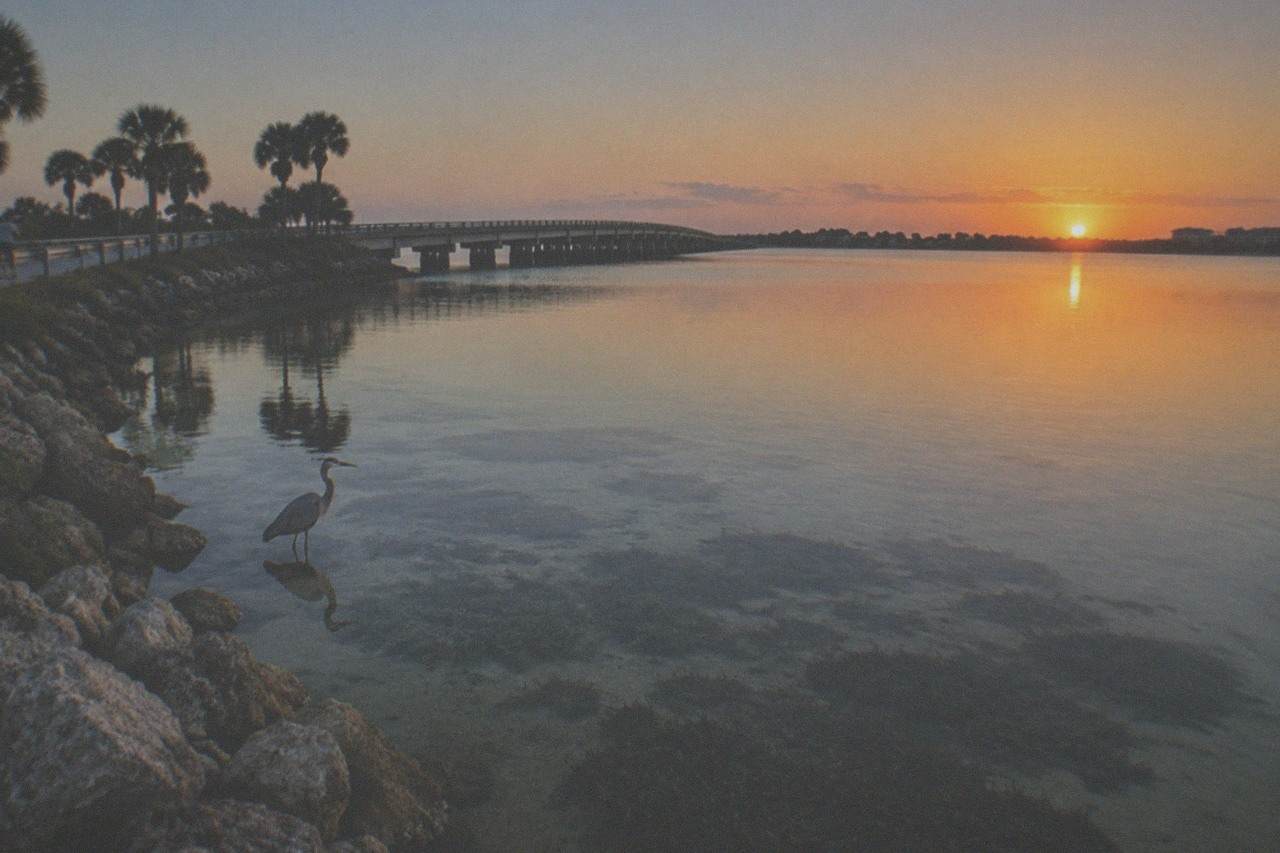
Mosquito Lagoon sits at the top of the Indian River Lagoon system, between New Smyrna Beach and the Kennedy Space Center, and it holds the distinction of being the only lagoon basin that the Marine Resources Council rated "good" in its most recent report. For Orlando visitors, that translates into something rare: shallow, clear water full of redfish, within a morning's drive of the theme parks. The lagoon is a sight-fisherman's fishery. Anglers pole or drift across grass flats in inches of water, looking for tails and wakes, and the fish are there year round.
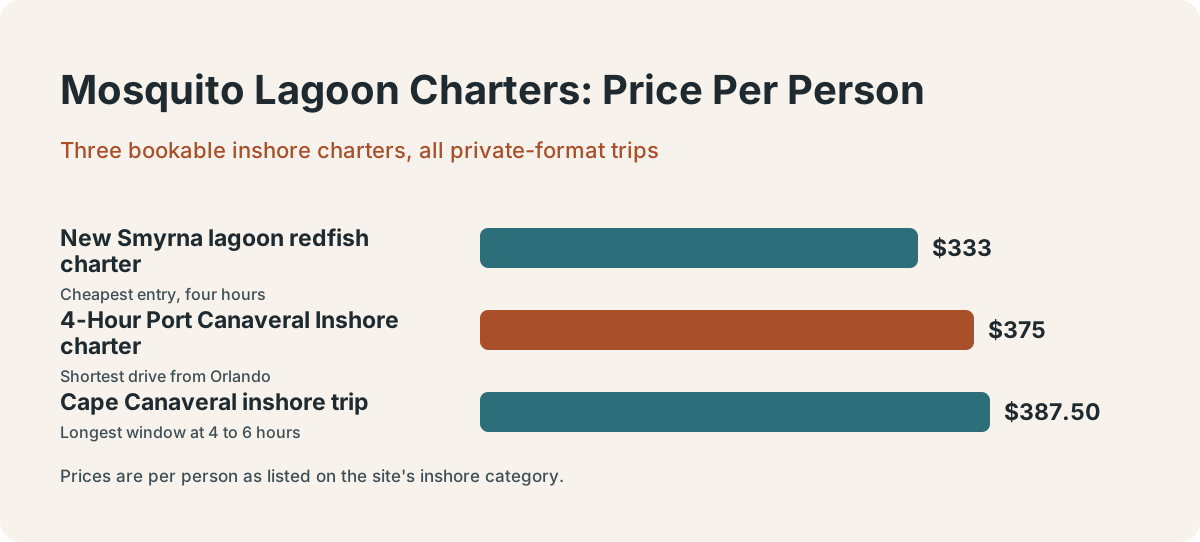
The site's inshore category covers exactly three bookable charters that fish this coast: the 4-Hour Port Canaveral Inshore charter from $375 per person, the Cape Canaveral inshore trip from $387.50 per person, and the New Smyrna lagoon redfish charter from $333 per person. This guide explains what each one actually targets, the licence rule that makes saltwater charters different from the bass lakes, when to go, and what the trip costs all in.
What Does Mosquito Lagoon Fishing Actually Target?
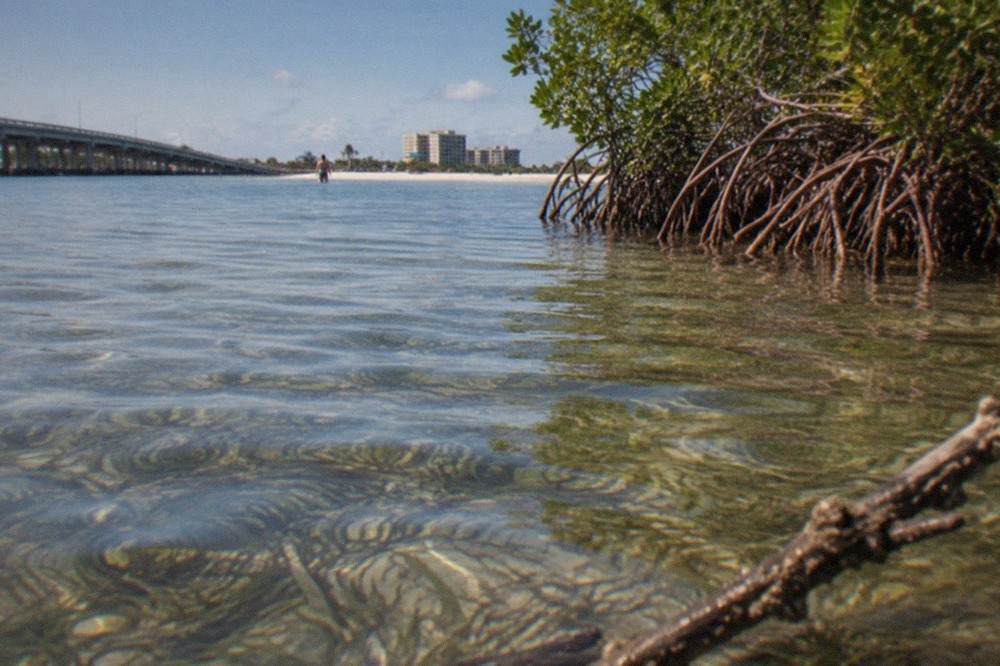
Mosquito Lagoon fishing targets redfish, spotted seatrout and snook over shallow seagrass flats, fished year round from a boat that floats in less than a foot of water. It is sight fishing more than cast-and-wait fishing: crews look for fish before casting. The lagoon's northern basin holds the healthiest seagrass in the system, which is why its redfish schools are among the most reliable on Florida's east coast.
The fishery is defined by its structure, or rather its lack of it. There are no reefs, no wrecks and no channels to speak of. What there is, in quantity, is seagrass: shoal grass and manatee grass beds that hold food and cover for juvenile and adult fish alike. Redfish in the lagoon run in schools that can number in the hundreds, particularly in fall, and individual fish commonly push past the upper end of the state slot. Trout, which anglers here still often call gator trout when they pass about 20 inches, sit in the same grass on the deeper edges. Snook work the mangrove lines and spoil islands at the basin's southern end, especially around Titusville and the Haulover Canal area.
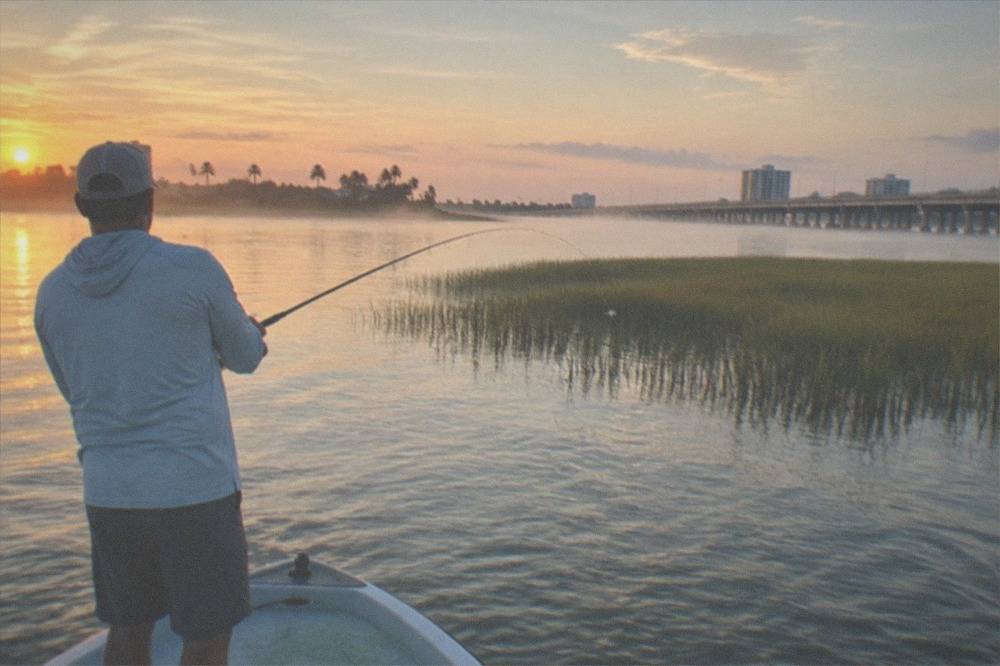
Charter crews commonly fish this water with light spinning tackle or fly rods, and the standard approach is to idle or pole upwind of a school, then present a soft plastic jig, a cut bait or a fly ahead of the fish. Anglers report that the hardest part is not the cast but the wait: fish spook easily in clear, shallow water, and a rushed presentation empties a flat fast. The lagoon's water clarity, which has improved measurably since 2021 as seagrass recovered, makes this style of fishing far more productive than it was during the system's worst years.
One thing worth knowing before booking: the lagoon is not the same as the open ocean. If your mental image of Florida saltwater fishing involves fighting a kingfish over a reef, that is an offshore trip, and the site's deep sea fishing from Port Canaveral guide covers that category separately. Inshore means protected water, small boats, light tackle and species that live their whole lives inside the barrier islands. For a comparison of the two lagoon systems themselves, see the site's Mosquito Lagoon versus Indian River Lagoon breakdown.
Which Orlando Charters Actually Fish The Lagoon?
Three bookable inshore charters fish this coast: the 4-Hour Port Canaveral Inshore charter from $375 per person (4.0 from 4 reviews), the Cape Canaveral inshore trip from $387.50 per person (5.0 from 3 reviews), and the New Smyrna lagoon redfish charter from $333 per person (5.0 from 1 review). All three are private-format trips in the 4 to 6 hour range. None offers hotel pickup, so you drive to the dock.
The differences between them come down to where they launch and what water they reach. The Port Canaveral inshore charter departs the Port Canaveral area, which puts the northern lagoon and the Banana River flats within range on a four-hour window. The Cape Canaveral inshore trip runs a longer 4 to 6 hour format from the same general coast, and its own listing states that the licence is included, which makes it the roster's clearest example of an included-licence saltwater trip. The New Smyrna charter launches further north, closest to the Mosquito Lagoon proper, and targets redfish, snook, and spotted sea trout in the lagoon system around New Smyrna Beach.
Review pools on all three are small, and honesty requires saying so plainly. A 5.0 from one review is a rating from one person, not a verdict. The Port Canaveral trip's 4.0 from 4 reviews is the most balanced figure of the three but still a thin sample. Treat these as real, bookable, verified listings with limited review history rather than as proven crowd favourites, and weigh the format, launch point and price more heavily than the stars.
Price-wise the three sit in a tight band. The New Smyrna redfish charter is the cheapest entry at $333 per person for four hours, and it is also the one whose listing most directly names the target species. The Port Canaveral trip at $375 buys the shortest drive from Orlando, roughly 45 to 60 minutes via SR-528. The Cape Canaveral inshore option at $387.50 is the most expensive per person but offers the longest window, up to six hours, which matters on a day when the fish are finicky until the tide turns. For a fuller cost picture across all three categories, the site's Orlando fishing charter prices guide compares every listing on the roster.
The Port Canaveral charter deserves a specific word for Orlando visitors, because the drive is the whole argument. Port Canaveral sits about 45 to 54 miles from the Orlando and Disney areas via the Beachline, typically 45 to 60 minutes outside cruise-embarkation mornings, when traffic can add time. That makes it the only inshore option on the roster you can genuinely book as a half-day outing without surrendering the whole day to driving.
Do You Need A Fishing Licence For A Lagoon Charter?
No, with a hedge. Florida exempts any individual saltwater fishing from a for-hire vessel, meaning a guide, charter or party boat, that holds a valid charter licence. Every inshore charter on this roster qualifies in principle, so passengers do not buy their own saltwater licence. The honest hedge is to ask your captain to confirm the boat's licence covers the trip before you board.
This is the single most important licence fact on the site, and it works in the opposite direction from the freshwater lakes. On a Lake Toho bass charter, every angler must hold their own Florida freshwater licence, because no guide exemption exists for freshwater clients. On the saltwater side, the state's own licensing page states the exemption plainly: "Individuals saltwater fishing from a for-hire vessel (guide, charter, party boat) that has a valid charter license." The operator's licence, not yours, is the one that matters. The site's do you need a fishing licence in Orlando guide covers the full distinction.
The reason for the hedge is practical rather than legal. A legitimate commercial charter holding a valid licence is standard practice on this coast, but ask your captain to confirm the boat holds a valid charter licence. that can spoil a morning. Captains answer this question daily, and asking costs nothing. All three inshore charters include the licence: the Cape Canaveral listing just states it most plainly on the page, so that trip removes even the question.
If you ever fish the lagoon without a charter, from a kayak, a dock or a bridge, the exemption does not apply and you need your own saltwater licence. Non-resident short licences are cheap: a 3-day saltwater licence is $17 and a 7-day is $30, identical to the freshwater fee schedule. Florida also runs licence-free saltwater days, and the next ones fall on June 5-6, 2027, September 4, 2027 and November 27, 2027, when the requirement is waived for all anglers though every other rule still applies.
What Fish Can You Catch In Mosquito Lagoon?
The three headline species are redfish, spotted seatrout and snook, and all three are present year round. Redfish are the lagoon's signature fish and school heaviest in fall. Trout run biggest from October through May. Snook peak around the spring and fall season windows, and black drum, flounder and tarpon add variety in the warmer months.
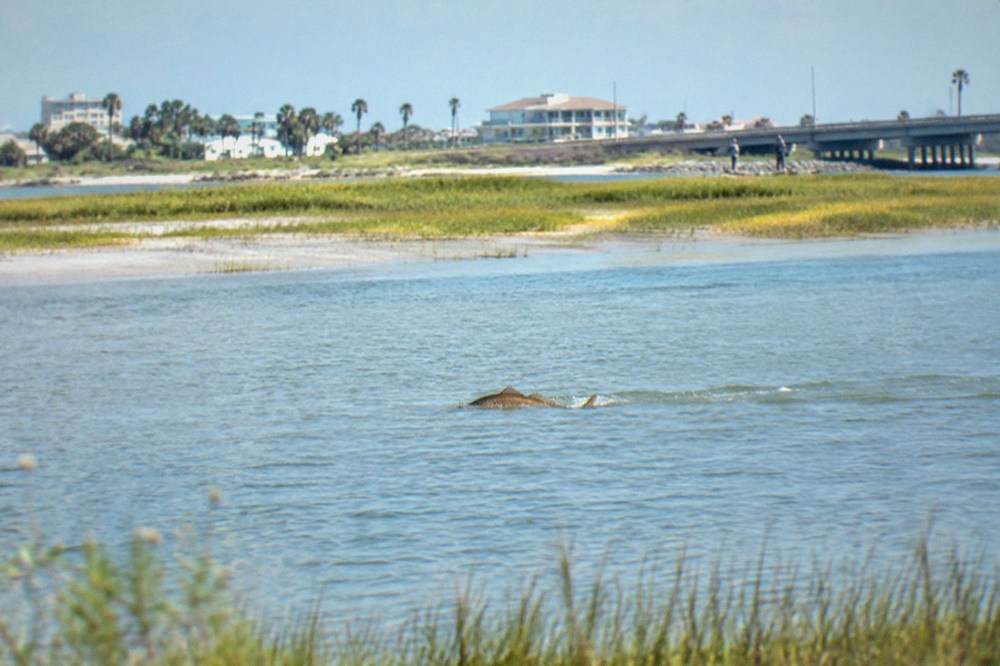
Redfish are the reason most anglers book this trip. The lagoon's northern basin produces schools that anglers report sighting in water so shallow the fish's backs break the surface, and the fall months of October and November are widely called the finest window for large redfish schools on the flats. One regulation matters more here than anywhere else on this coast: within the Indian River Lagoon management region, redfish are catch-and-release only, a rule confirmed in multiple 2026 sources and distinct from the statewide 18 to 27 inch slot that applies where harvest is allowed. You can catch them all day. You cannot keep one.
Trout fishing in the lagoon now operates under regional rules that took effect April 1, 2026. In the Indian River Lagoon region the recreational bag limit is 2 fish per person, the slot is 15 to 19 inches, there is no over-slot allowance, and the season runs January 1 through October 31, closed November 1 to December 31. The rules were written specifically for this estuary, reflecting its water quality and seagrass history, so check the current numbers on the FWC site before you plan a fish dinner around a trout.
Snook follow a two-window season in this management region: open February 1 through May 31, and September 1 through December 14, with the slot at 28 to 32 inches and one fish per person per day. Outside those windows, catch-and-release snook fishing is legal and, in the lagoon, very good. April is the peak staging month before the fish move, and January cold snaps concentrate them near warm-water spots.
| Species | Present | Peak window | Keep? (IRL region) |
|---|---|---|---|
| Redfish | Year round | October to November schools | Catch and release only |
| Spotted seatrout | Year round | October to May for big fish | 2 per person, 15 to 19 inches, closed Nov 1 to Dec 31 |
| Snook | Year round | April staging, fall feed | 1 per person, 28 to 32 inches, seasonal windows |
| Black drum | Year round | Winter | Statewide rules apply |
| Tarpon | Warm months | Summer | Catch and release, no harvest |
The full species picture across all three charter categories, including what the offshore boats add, is in the site's guide to what fish you can catch near Orlando.
When Is The Best Time Of Year To Fish The Lagoon?
October through May is the prime window. Fall delivers the biggest redfish schools, winter concentrates trout and snook near warm water on cold mornings, and spring brings the snook staging run. Summer fishing is productive early and late but the fish spread out, and sustained water temperatures above 90 degrees, which triggered a localized Brevard fish kill in September 2026, are the one condition worth watching.
Charter crews describe the cool season, October through May, as the dependable stretch, and the reason is partly fish behaviour and partly human comfort. Redfish school hard in October, big trout move onto the flats behind cold fronts from December through February, and April puts snook in predictable staging areas ahead of their migration. The mornings are cool enough that a four-hour trip feels short rather than punishing.
Summer changes the game without ending it. Fish feed aggressively at first light, and anglers report good numbers before the midday heat pushes fish to deeper edges. The risk factor is water temperature. In September 2026, local reporting documented a fish kill between the 520 and Pineda causeways in the Brevard portion of the lagoon, attributed to sustained water temperatures above 90 degrees, storm runoff and low oxygen. Events like that are localized, and the lagoon's overall trajectory has been recovery, not decline. Still, a summer booking is best made for the earliest slot the captain offers.
For month-by-month planning across all of Central Florida's fisheries, including the bass lakes and the offshore runs, the site's best time of year to fish near Orlando guide is the fuller resource.
How Much Does A Lagoon Charter Cost From Orlando?
The three inshore charters run from $333 to $387.50 per person for 4 to 6 hour private trips, a band far below the site's deep-sea options, which start at $675 per person. Budget the licence at zero, since the for-hire exemption covers passengers, and add a tip of 15 to 20 percent of the charter cost, which is the customary range for Florida guides.
The per-person prices are the headline numbers, but the all-in picture includes the drive and the tip. Fuel costs drew real attention across Central Florida's charter industry in 2026: Brevard captains discussed adding fuel surcharges of roughly $50 to $60 as gas prices climbed past $4 a gallon in spring, though several long-time guides said they preferred absorbing the cost because surcharges are not common practice among guides. Nothing in this roster's listed prices includes a surcharge, but it is fair to ask the operator when booking whether any fuel add-on applies.
| Charter | Price per person | Duration | Rating and reviews | Drive from Orlando |
|---|---|---|---|---|
| New Smyrna lagoon redfish charter | From $333 | 4 hours | 5.0 from 1 review | About 75 minutes |
| Port Canaveral inshore charter | From $375 | 4 hours | 4.0 from 4 reviews | 45 to 60 minutes |
| Cape Canaveral inshore charter | From $387.50 | 4 to 6 hours | 5.0 from 3 reviews | 45 to 60 minutes |
Against broader market context, these prices sit at the accessible end of the saltwater scale. General Central Florida inshore charters typically run $400 to $600 for a half day for a small group, and offshore full days run $1,100 to $1,500. The roster's per-person pricing structure means a solo angler or a pair can get onto private saltwater water for under $400 each, which is the cheapest saltwater entry point this site offers. The tipping range of 15 to 20 percent, cash preferred, adds roughly $50 to $80 per person on a $387.50 trip, and crews who clean fish or coach beginners all day sit at the top of that range.
What Are The Rules For Redfish, Snook And Trout?
Redfish are catch-and-release only in the Indian River Lagoon region, including Mosquito Lagoon. Snook run a 28 to 32 inch slot, one per person, in two seasonal windows: February 1 to May 31 and September 1 to December 14. Trout allow 2 per person at 15 to 19 inches, January 1 through October 31. All three can be caught year round regardless of season.
The catch-and-release redfish rule is the one that surprises visitors most, because the statewide slot of 18 to 27 inches applies almost everywhere else in Florida. The lagoon region's stricter rule exists because this estuary has been through two decades of water quality trouble, and regulators treat its redfish as a recovery stock. Practically, it changes nothing about the fishing: the schools are still there, the fights are still there, and charter crews are set up for it. It changes the dinner plan.
Snook seasons in this region are defined by a boundary that runs from Lytle Avenue in New Smyrna Beach south to the Martin-Palm Beach county line, and the lagoon sits inside it. The closed stretches, December 15 through January 31 and June 1 through August 31, are closed to harvest only. Release fishing continues, and summer snook on light tackle in the mangroves is a legitimate target for anglers who do not need a fish in the box.
| Species | Slot (IRL region) | Bag limit | Open season |
|---|---|---|---|
| Redfish | Catch and release | None | Year round, release only |
| Snook | 28 to 32 inches | 1 per person per day | Feb 1 to May 31, Sep 1 to Dec 14 |
| Spotted seatrout | 15 to 19 inches | 2 per person | Jan 1 to Oct 31 |
Regulations shift, and the FWC's own pages are the source of record. The snook windows above are confirmed in FWC announcements from 2026, and the seatrout rules come from the April 2026 regional management change, but a trip booked months out deserves a two-minute check of the current numbers on the official site before you go. The site's Florida fishing regulations explained guide carries the fuller breakdown, including the licence-free days that let unlicensed anglers fish from shore.
How Do You Get To Mosquito Lagoon From Orlando?
The launch points sit 45 to 75 minutes from Orlando depending on the charter. Port Canaveral is the closest at roughly 45 to 54 miles via SR-528, typically 45 to 60 minutes. New Smyrna Beach is further north, about 75 minutes. None of the three charters offers hotel pickup, so plan the drive, the parking and a pre-dawn alarm.
The Beachline Expressway, SR-528, is the artery for the two Canaveral launches, running straight east from the Orlando airport corridor to the port. Traffic is manageable except on cruise-embarkation mornings, when the road fills with shuttle buses and the drive can stretch well past an hour. A fishing charter that meets at the dock at 7 a.m. means leaving central Orlando by about 5:45 on a cruise day, a detail worth checking against the port's Saturday schedule when you book.
The New Smyrna launch is a different drive, north via I-4 and then east, and it puts you closest to the Mosquito Lagoon proper rather than the Banana River end of the system. That extra 15 to 20 minutes of driving buys proximity to the lagoon's most famous flats, which is the whole reason that charter names redfish in its title. For anglers who want the shortest possible drive, the Port Canaveral option wins; for anglers who want the classic Mosquito Lagoon experience, the New Smyrna option is the one that actually fishes it.
One practical note on timing: the best lagoon fishing is at first light, and every charter on this roster runs morning departures. That is not a sales line, it is how shallow-water fishing works. Fish on the flats are least pressured before boats and sun push them down, so book the earliest slot you can stand and treat the drive as part of the trip. If the drive itself is a dealbreaker, the site's guide to free fishing spots and piers near Orlando lists water you can reach without a charter at all.
What Should You Bring On An Inshore Charter?
Bring polarized sunglasses, sun protection, non-marking shoes, a small cooler for drinks and whatever the captain tells you to bring, which is usually nothing else. Tackle, bait, rods and the licence question are all handled by the boat. A hat, reef-safe sunscreen and a light rain layer cover the rest, because lagoon weather changes fast and there is no cabin to retreat to.
Polarized sunglasses are the single most valuable item on this list, and they are not optional for this fishery. Sight fishing depends on cutting surface glare to see fish and grass edges, and anglers who arrive without them fish blind while everyone else on the boat calls out targets. Any decent pair of polarized lenses works; amber or copper tints are the common choice for tannin-stained and shallow water.
Everything else is logistics. A small soft cooler keeps water and sports drinks cold, and hydration matters more than people expect on a flat with no shade. Most captains supply water anyway, but confirming at booking is polite and free. Cameras live in dry bags. Phones go in pockets that zip. The full checklist, including what changes between freshwater and saltwater trips, lives in the site's what to bring on a Florida fishing charter guide, and it is worth a read the night before.
The one thing not to bring is your own rod and tackle unless the captain invites it. These boats are rigged for the water they fish, the lures match the forage, and a favourite bass rod from home is usually the wrong tool for a 30 inch redfish in six inches of water. Ask first, and if the answer is to leave it, leave it.
Which Lagoon Charter Should You Book?
Book the Port Canaveral inshore charter if the shortest drive and a tight four-hour window fit your trip, the New Smyrna redfish charter if you want the classic Mosquito Lagoon flats and the lowest price, and the Cape Canaveral inshore trip if you want the longest window and the listing that explicitly includes the licence. All three cover passengers under the saltwater for-hire exemption, so the choice is logistics, not paperwork.
For a family with one free morning between park days, the Port Canaveral trip at $375 per person is the pragmatic pick: under an hour each way, four hours on the water, and a drive home by early afternoon. For a visiting angler whose whole point is Mosquito Lagoon itself, the New Smyrna charter at $333 is the honest answer, because it is the one listing that names the lagoon's redfish fishery in its title and launches closest to it. For a pair of anglers who want time to wait out a tide, the Cape Canaveral trip's 4 to 6 hour format at $387.50 is the format advantage.
The review pools are thin on all three, and this site will not dress that up. What is verifiable is the format, the price, the launch point and the licence rule, and those four facts decide the booking more often than a handful of reviews would. Whichever you choose, confirm the meeting point and the departure time the day before, ask the captain to confirm the boat's charter licence covers its passengers, and check the current redfish and trout rules on the FWC site the same week you fish.
The lagoon is the closest thing Central Florida has to a trophy sight-fishery, and it is an hour from the theme parks. Whether the 4-Hour Port Canaveral Inshore charter or the New Smyrna redfish trip fits your plans better, both put you on redfish water without a licence counter, a boat ramp or a 5 a.m. fuel stop on your own to-do list. Fishing Tours Orlando keeps every inshore listing verified against the live roster so the price you read here is the price you book.
Common Questions About Mosquito Lagoon Fishing
Do I need a fishing licence for a Mosquito Lagoon charter?
No. Florida exempts individuals saltwater fishing from a for-hire vessel that holds a valid charter licence, which covers every inshore charter on this roster. Ask your captain to confirm the boat's licence before the trip, and if you ever fish the lagoon from shore, a kayak or a dock, the exemption no longer applies and you need your own saltwater licence, from $17 for a 3-day non-resident licence.
Can you keep redfish from Mosquito Lagoon?
No. The Indian River Lagoon management region, which includes Mosquito Lagoon, is catch-and-release only for redfish, a rule stricter than the statewide 18 to 27 inch slot. You can catch them all day; the fish goes back every time. Snook and spotted seatrout can be kept in season within their regional slots.
How far is Mosquito Lagoon from Orlando?
The launch points sit 45 to 75 minutes from Orlando. Port Canaveral is about 45 to 54 miles east via SR-528, typically 45 to 60 minutes, while New Smyrna Beach, closest to the Mosquito Lagoon flats proper, is about 75 minutes. None of the three inshore charters offers hotel pickup, so plan the drive around a morning departure.
What is the best month to fish the lagoon?
October and November deliver the biggest redfish schools, and the broader October-through-May cool season is the dependable window. Winter mornings produce the biggest trout behind cold fronts, April brings the snook staging run, and summer fishing is good early and late but spreads the fish out. Book the earliest slot the captain offers in any month.
What fish can you catch in Mosquito Lagoon?
Redfish, spotted seatrout and snook are the three headline species, all present year round. Black drum and flounder add winter and spring variety, and tarpon move through in the warm months. Redfish are release-only in this region, trout fall under the April 2026 regional rules of 2 per person at 15 to 19 inches, and snook run a 28 to 32 inch slot in two seasonal windows.
How much does an inshore lagoon charter cost?
The three bookable inshore charters run from $333 to $387.50 per person for 4 to 6 hour private trips. The licence costs passengers nothing under the for-hire exemption, and the customary tip for a Florida guide is 15 to 20 percent of the charter cost, cash preferred.