Florida Fishing Regulations Explained: Licences, Bag Limits And Size Rules
Florida's fishing rules split at the shoreline: one licence rule for the bass lakes around Orlando, a different one for the saltwater lagoons and the Atlantic. This guide walks through the whole structure, with the licence fees, the free days and the regional quirks that catch visiting anglers out.
Short answer
On a licensed saltwater charter out of Port Canaveral or the lagoons, the operator's charter licence covers you as a paying passenger. On a freshwater bass charter on Lake Toho, the Butler Chain or Johns Lake, it does not: every angler needs their own licence, from $17 for a 3-day non-resident permit. Bag and size limits then vary by species and region.
Florida runs one of the more complicated recreational fishing rulebooks in the country, and the version that matters around Orlando is genuinely two rulebooks. The bass lakes south and west of the city, Lake Tohopekaliga, the Butler Chain, Johns Lake, follow freshwater law. The inshore lagoons east of the city and the Atlantic water off Port Canaveral follow saltwater law, and saltwater law is where the regional management zones, the seasonal closures and the unusual licence exemption live. Whether you need a licence at all is covered in do you need a fishing license for an Orlando charter. A visitor booking a 6-hour Johns Lake bass charter out of Winter Garden faces a different set of obligations than one booking a private deep-sea trip from Port Canaveral, even though both trips leave from roughly the same metropolitan area on the same morning.
This guide explains the structure rather than reciting every number, because the numbers are exactly what goes stale. Where a figure is firm and verified against the state's own pages, it is printed. Where a limit needs a per-water check before you rely on it, it says so.
Do You Need A Fishing Licence On An Orlando Charter?
It depends entirely on whether the boat is in fresh or salt water. On a licensed saltwater charter, a for-hire vessel with a valid charter licence, a paying passenger is exempt from holding their own licence. On a freshwater bass charter there is no equivalent exemption: the guide's licence does not cover clients, so each angler needs their own Florida freshwater fishing licence.
That single distinction is the most misunderstood rule in Florida fishing, and it is worth being blunt about it. The state's own licence page lists the exemptions for each water type separately, and only the saltwater list includes for-hire vessels: "Individuals saltwater fishing from a for-hire vessel (guide, charter, party boat) that has a valid charter license." You can read the full exemption list on the official FWC licence page.
The freshwater exemption list is narrow and specific: homestead-county residents, certain disabled residents, active military on leave, private ponds, a Georgia reciprocity on two border waters, and the licence-free weekends. A charter client is not on it. In practice this means every one of the ten freshwater bass listings on this site, from the 4-Hour Family Pontoon Charter on Lake Toho to the Butler Chain and Lake Apopka trips, expects each angler to arrive with a licence or buy one. Several listings state the exclusion outright: the pontoon charter whose listing is literally titled "License Not Included" exists on this roster as the clearest proof point, and the Butler Chain and Johns Lake charters list the licence under exclusions too.
For the saltwater side, the exemption is real but still worth a hedge. The rule assumes the operator holds a valid charter licence, which any legitimate commercial captain does, but the site has not inspected every boat's paperwork. Ask your captain to confirm before the trip; it is a ten-second question and captains answer it daily.
The practical cost of getting this wrong is not huge, but it is avoidable. A licence citation on the water can end a trip early, and the fix costs less than a tank of fuel. The next section covers what the licence actually costs.
How Much Does A Florida Fishing Licence Cost?
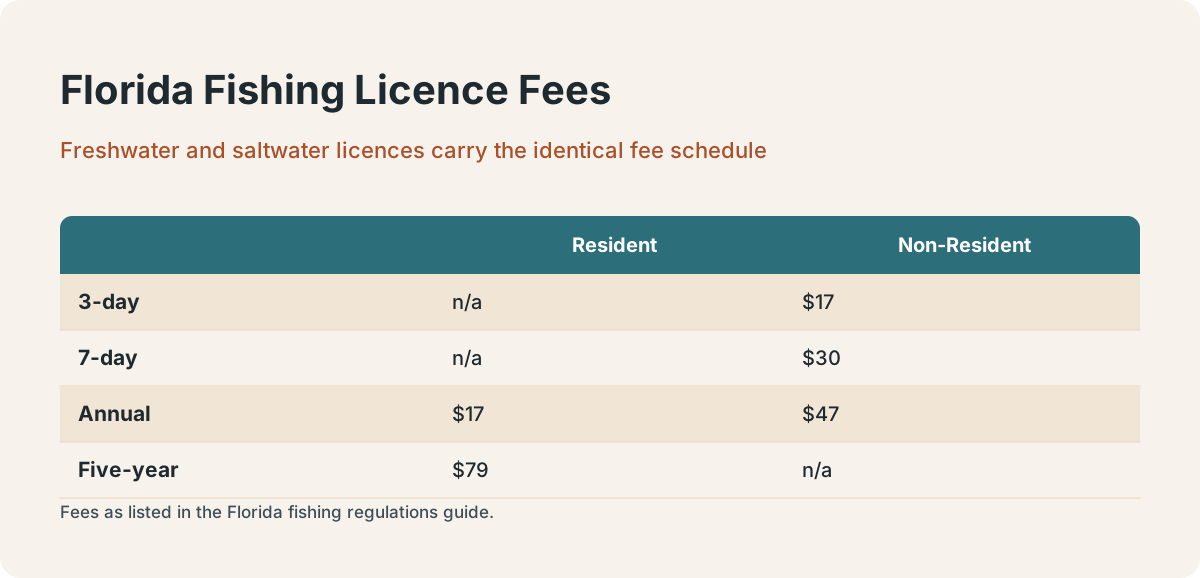
A non-resident visiting Orlando for a short fishing trip wants the 3-day freshwater or saltwater licence at $17, or the 7-day licence at $30. The annual non-resident licence is $47, and Florida residents pay $17 for a year or $79 for five years. Freshwater and saltwater licences carry the identical fee schedule, so the choice is about duration, not water type.
The table below lists the official FWC licence fee schedule, and the symmetry between the two water types is worth pausing on. Florida charges the same amounts whether you are fishing Lake Toho for largemouth bass or the Indian River Lagoon for redfish, which surprises anglers from states that price saltwater permits higher.
| Licence | Resident | Non-Resident |
|---|---|---|
| 3-day | n/a | $17 |
| 7-day | n/a | $30 |
| Annual | $17 | $47 |
| Five-year | $79 | n/a |
For a family of four doing one bass charter during a Disney-area vacation, the arithmetic is simple: four 3-day licences at $17 each, $68 total, added on top of the charter price. On a trip like the Budget Bass Charter near Disney, from $175 per person, the licences are a real line item worth budgeting before checkout. On the saltwater side the same family pays nothing extra, because the charter exemption covers them.
There is one more wrinkle that trips up visitors: the licence is per angler, not per boat. A private bass-boat charter that takes up to four anglers, like the Half-Day Private Bass Charter out of Big Toho Marina, from $200 per person, does not include four licences in that price. Each person casting a line needs to be covered.
If you are comparing charters across the three categories on this site, this licence difference is part of the honest price comparison, and the trio below spans all three rulebooks: a freshwater Johns Lake trip where you bring your own licence, an inshore Cape Canaveral trip where the charter licence covers you, and a deep-sea trip from Port Canaveral where the same exemption applies.
What Are Bag Limits And Size Limits, And How Do They Work?
A bag limit is the number of a species one angler may keep per day, and a size limit is the legal length window, usually a slot with a minimum and maximum, that a kept fish must fall inside. Florida enforces both together: a fish that is over the slot goes back even when the bag isn't full, and a fish under the minimum goes back even when it is the first of the day.
The structure matters more than any single number, because the numbers move. Florida manages many saltwater species by region, so the redfish rule in the Indian River Lagoon is not the redfish rule in the Panhandle, and reef fish seasons are set and adjusted by both the state and federal authorities. A printed bag-limit table in a travel article is stale the moment a commission meeting changes a slot, which is why this guide explains the machinery and points to the live sources rather than freezing a full species table.
For largemouth bass specifically, this site takes a deliberately conservative line. The statewide bass framework is set by FWC rule, individual water bodies can carry special regulations, and the current per-lake specifics need a fresh check before any trip. The honest instruction is the one this site repeats everywhere: check the current limit on MyFWC.com before you go. Your captain will know the local rules cold, but the licence and the legal accountability sit with the angler, not the guide.
The concept that most often confuses visitors is the aggregate limit, which caps the total number of fish across a group of related species rather than per species. The snapper-grouper complex offshore works this way: a 10-fish aggregate caps the combined take of snappers, groupers and several related reef species, so catching seven of one kind shrinks what remains for the others. If you book a deep-sea trip such as the Private Deep-Sea charter from Port Canaveral, from $725 per person, the captain will walk the crew through the aggregate before the first drop.
Catch-and-release is the other term worth knowing. In some management regions a species is release-only year-round regardless of size, and in others a seasonal closure converts a normally keepable fish into a release fish for a few months. Anglers who understand that a closure changes what you may keep, not whether you may fish, plan better trips.
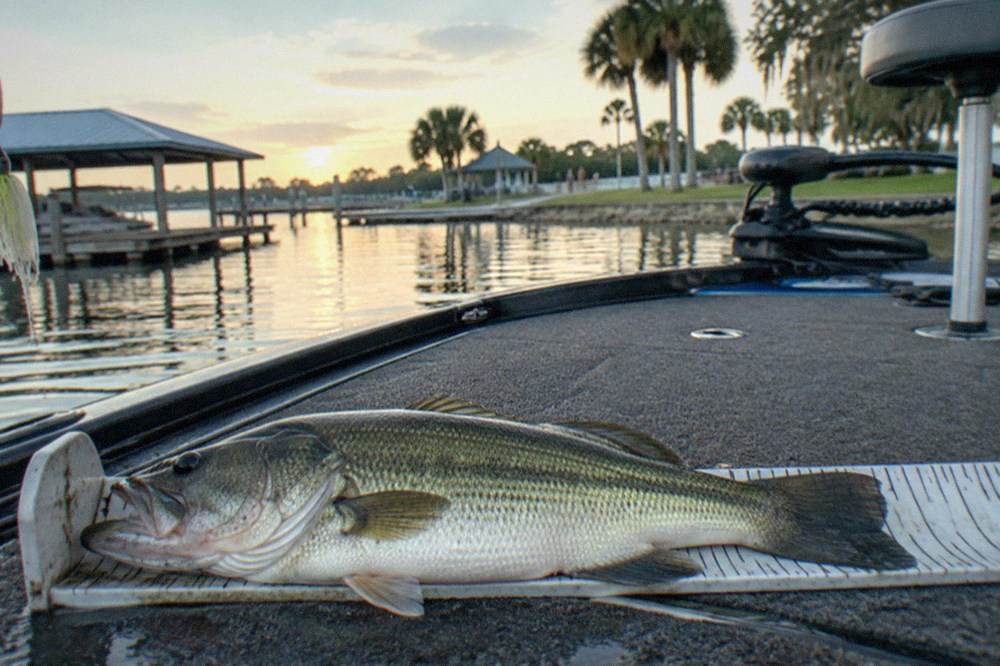
The rules also interact with the charter format. On a private freshwater trip like the 6-Hour Johns Lake Bass Charter out of Winter Garden, from $237.50 per person and rated 5.0 across 53 reviews, the guide leads the fishing but each licensed angler's own limit applies; the licence you bought is yours, and so is the legal limit attached to it.
That licence-plus-limit pairing is also why the Johns Lake trip works well as a first freshwater charter: the obligations are simple, the six-hour window gives the captain time to move between schools, and the lake's largemouth and bluegill fishery sits under the same statewide framework as the bigger-name lakes closer to Disney. For groups who want the compliance question handled end to end, the box below points at the same listing with the booking details.
Which Saltwater Rules Change By Region Around Orlando?
The Indian River Lagoon management region, which runs from New Smyrna Beach south along the lagoon system, is stricter than the statewide defaults: redfish are catch-and-release only, snook harvest opens in two seasonal windows, and spotted seatrout carry their own regional bag, slot and season that took effect in April 2026. Offshore, the Atlantic red snapper season is a short, declared event rather than a year-round fishery.
The lagoon rules deserve their own section because they are genuinely different from the rest of Florida, and because the inshore charters on this site fish exactly these waters. The New Smyrna Lagoon Redfish Charter, from $333 per person, targets redfish in a region where redfish harvest is closed entirely: every redfish caught on that trip goes back, by design and by law. That is not a downside. Release fishing for big lagoon reds is the point of the fishery, and the seagrass recovery documented across the lagoon system in recent years, with coverage more than doubling since 2021 lows.
Snook are managed on a regional season rather than a blanket rule. In the lagoon region the harvest windows run February 1 through May 31 and September 1 through December 14, with a 28 to 32 inch slot and one fish per person per day when open. Outside those windows, catch-and-release is legal. The regional detail matters enough that the state publishes zone-specific pages; the coastal species rules are laid out on the Florida saltwater regulations site.
Spotted seatrout picked up new regional management in 2026, with the lagoon region getting a 2-fish bag, a 15 to 19 inch slot and a closed period in November and December. The change reflects the estuary's history of water-quality swings and fish kills, and it is the clearest example of why "what's the limit for trout" has no single Florida answer.
Offshore from Port Canaveral, the headline rule is the Atlantic red snapper season, which in 2026 ran as a declared window: state waters closed September 22 ahead of an October 9 opener, with a one-fish-per-person daily bag, no minimum size, and a trip-declaration requirement for private anglers. The season is short enough that most offshore guests simply fish for whatever else is running, and the late-2026 reports off Port Canaveral had mahi, wahoo and blackfin tuna showing up on the fall run. The state's snapper pages, including the FWC snapper regulations page, carry the current dates.
Grouper follow seasonal logic too: Atlantic gag grouper opens May 1 and closes at the start of August, so a summer bottom-fishing trip and a fall one fish under different rules for the same structure.
| Species | Lagoon Region Rule | Offshore Port Canaveral Context |
|---|---|---|
| Redfish | Catch-and-release only | Not typically an offshore target |
| Snook | Two harvest seasons, 28-32 inch slot | Inshore species, not offshore |
| Spotted seatrout | 2 fish, 15-19 inches, seasonal closure | Inshore species |
| Red snapper | Not a lagoon fishery | Short declared season, 1 per person per day |
| Grouper complex | Inshore juveniles only | Atlantic gag open May 1 to early August |
For anglers weighing the inshore versus offshore decision, the regulation picture is one more input: the inshore lagoon fishery is largely release-based for its marquee species, while the offshore trips run on seasonal reef and pelagic rules. The Inshore Charter out of Cape Canaveral, from $387.50 per person, whose own listing states the licence is included, fishes the northern end of this system.
What Are The Licence-Free Fishing Days In Florida?
Florida waives the licence requirement for all recreational anglers, residents and visitors alike, on a handful of set days each year: the first weekend of April and the second weekend of June for freshwater, and the first weekend of June, the first Saturday of September and the Saturday after Thanksgiving for saltwater. In 2027 those fall on April 3-4 and June 12-13 for freshwater, and June 5-6, September 4 and November 27 for saltwater.
The rule is ongoing and annual, not a one-off promotion, and it is the one legitimate way to fish Florida water without a licence as a visitor. Every other rule still applies on those days: seasons, size limits and bag limits are unaffected, so a licence-free day does not convert a closed season into an open one. The state frames it exactly that way on the FWC free fishing days page.
For trip planning around Orlando, the April and June freshwater weekends are the interesting ones. They land in the spring trophy window, when Central Florida's bass are shallow and the prespawn bite on Lake Toho and the Kissimmee Chain is at its most dependable, and they remove the per-angler licence cost from a family booking. A party of four on a Butler Chain private charter saves the licence line item entirely by picking one of those two weekends. The saltwater days land in June, September and late November, and the June date is the strongest of the three for the lagoon fishery.
One honest caveat: the free days waive the licence, not the charter's own rules. A guide may still ask you to hold a licence for their own insurance or booking-policy reasons, and the exemption list is a legal floor, not a guarantee about every operator. Check with the captain when you book.
How Do Regulations Differ Between Bass Lakes And Saltwater Charters?
In practice the freshwater trips are simpler to plan: one licence per angler, one statewide bass framework, and a captain who handles the local knowledge. The saltwater trips have no licence task at all, but the species rules are layered by region, season and sometimes federal waters, so the captain's role in compliance is much bigger. The trade is paperwork on one side and rulebook complexity on the other.
On the freshwater side, the compliance burden on the angler is front-loaded: buy the licence, show up, fish. The bass lakes on this roster, Lake Tohopekaliga, the Butler Chain of Lakes in Windermere, Johns Lake in Winter Garden and Lake Apopka, all sit under the same statewide largemouth framework, and the lake-specific details are exactly what a guide like the Johns Lake charter captain tracks day to day. That charter, which runs 6 hours and targets largemouth and bluegill, is a good example of the format: the angler's obligations end at the licence purchase, and the captain's begin there.
On the saltwater side the roles flip. The angler arrives with nothing to buy, but the trip runs through a patchwork: the lagoon's release-only redfish rule, the snook season calendar, the trout slot, and offshore, the boundary between state and federal water where different authorities set different seasons for the same fish. A private deep-sea charter out of Port Canaveral, from $725 per person and rated 5.0 across 49 reviews, crosses that line on most full-day runs, and the captain's call on what to keep is made with the current declarations in hand.
| Compliance Task | Freshwater Bass Charter | Saltwater Charter |
|---|---|---|
| Angler licence | Required, each angler, from $17 | Covered by charter licence exemption |
| Species rules | Statewide bass framework, per-lake checks | Regional zones, seasons, aggregates |
| Seasonal closures | Minimal for bass | Significant: snook, trout, snapper, gag |
| Federal waters | Not applicable | Applies on offshore runs |
| Captain's role | Local limits, patterns, safety | Live rule interpretation, declarations |
The honest summary for a visitor is this: budget twenty minutes and seventeen dollars for the freshwater licence, and budget a few minutes of listening on the saltwater side when the captain explains what stays and what goes back. Neither is hard. Both are easier than guessing.
Where Should You Check The Current Rules Before Your Trip?
Check MyFWC.com for licences, seasons and bag limits, the Florida saltwater regulations site for zone-specific coastal rules, and NOAA Fisheries for anything in federal water. Your charter captain is the best real-time source on the day, but the angler holds the licence and the legal limit, so the official pages are the ones to trust over any article, including this one.
The reason this site is deliberate about not printing a full species table is that the rules genuinely move. The spotted seatrout rules changed in 2026. The red snapper season was restructured by court action and federal exemption permits in the same year. A guide that froze those numbers would be wrong within months, and a wrong bag limit is not a harmless error for the angler holding the rod.
The practical pre-trip routine takes ten minutes. Confirm whether your trip is freshwater or saltwater, buy the licence if it is freshwater, skim the species page for your target, and ask the captain one question at booking: is there anything closed or release-only I should know about this week? Captains answer that question before it is asked on most trips anyway.
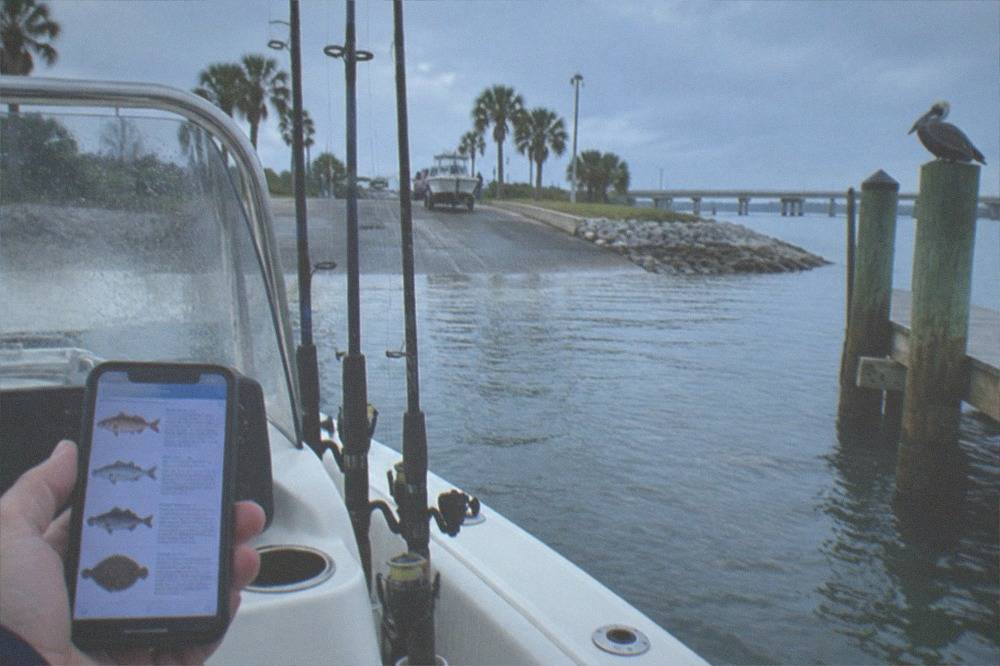
For anglers who want the deeper background on a specific water, the site's own lake guides go further: the Lake Toho bass fishing guide covers the Kissimmee Chain's trophy fishery, and the Butler Chain of Lakes fishing guide covers the Windermere chain. The licence cost question, including the non-resident fee schedule in full, has its own page at fishing licence costs for non-residents in Florida.
How Do You Stay Legal Without Overthinking It?
Buy the right licence if your trip is freshwater, confirm the charter licence covers you if it is saltwater, let the captain interpret the species rules on the day, and check MyFWC.com once before you travel. That four-step routine covers essentially every compliance question an Orlando-area charter angler will face, and it takes less time than the drive to the marina.
The overthinking risk is real in both directions. Some anglers arrive convinced they need a stack of permits and stamps they do not need; the saltwater charter exemption makes most of that unnecessary. Others arrive having read nothing, assuming the guide handles everything, which is exactly the assumption the freshwater licence rule punishes. The middle path is short.
Costs help put the rules in perspective. A 3-day non-resident licence at $17 is a rounding error next to a $237.50 per-person Johns Lake charter, and it is the only legal requirement the freshwater side adds to your bill. On the saltwater side the requirement is zero dollars and one hedge: ask the captain to confirm the charter licence, then fish.
Tipping, licensing and limits all sit in the same bucket of trip logistics, and this site covers each in its own place: the guide to tipping a fishing captain in Florida handles the gratuity question, and the charter prices guide for Orlando puts the licence line item in the context of the full cost of a day on the water. For the broader decision of which style of trip suits your group, the private versus shared charter comparison walks through the formats available near the theme parks.
The last word belongs to the honest framing this site uses everywhere. Fishing Tours Orlando publishes verified figures and points to the official sources for everything that moves, because the alternative, a frozen table of limits, is the fastest way to hand a reader a rule that expired. The licence exemption, the fee schedule and the free days above are the stable parts of the rulebook. Everything else, check before you cast.
If the regulatory picture is clear and the only remaining question is which trip to book, the three listings below span the full range: a licence-required freshwater bass charter, a licence-included inshore trip, and an offshore run where the captain handles the federal-water rules.
Common Questions About Florida Fishing Regulations
Do You Need A Fishing Licence On An Orlando Charter?
On a licensed saltwater charter, no: a paying passenger on a for-hire vessel with a valid charter licence is exempt. On a freshwater bass charter on Lake Toho, the Butler Chain, Johns Lake or Lake Apopka, yes: every angler needs their own Florida freshwater fishing licence, and none of the freshwater listings on this site bundles one into the price.
How Much Is A Florida Fishing Licence For A Non-Resident?
The 3-day non-resident licence is $17, the 7-day is $30 and the annual is $47. The fee schedule is identical for freshwater and saltwater licences, so the only decision is how long you need it. Florida residents pay $17 for an annual licence or $79 for a five-year one.
What Is The Bag Limit For Largemouth Bass In Florida?
The statewide bass framework is set by FWC rule and individual water bodies can carry special regulations, so this site does not print a specific number. Check the current limit on MyFWC.com before you go, and ask your captain, who will know the local rule for the lake you are fishing.
Can You Keep Redfish In The Indian River Lagoon?
No. The Indian River Lagoon management region is catch-and-release only for redfish, which is stricter than the statewide slot that applies where harvest is allowed. Every redfish caught on a lagoon charter goes back, and the release fishery is the point of the trip.
When Are The Licence-Free Fishing Days In Florida?
Freshwater licence-free days fall on the first weekend of April and the second weekend of June: April 3-4 and June 12-13 in 2027. Saltwater days are the first weekend of June, the first Saturday of September and the Saturday after Thanksgiving: June 5-6, September 4 and November 27 in 2027. All other rules still apply on those days.
Does The Charter Captain Handle The Fishing Regulations For You?
Partly. On saltwater trips the captain holds the charter licence that covers you and interprets the regional species rules on the day. On freshwater trips the captain handles the local knowledge but the licence obligation sits with each angler. In both cases the angler holds the legal limit, so a quick check of MyFWC.com before travel is the right final step.